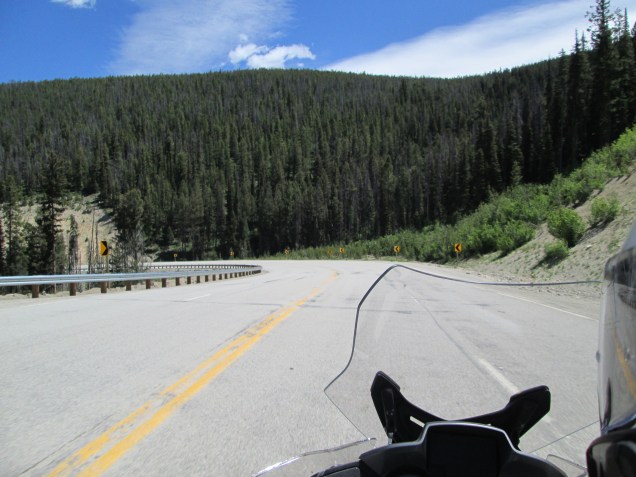
We had a long but good day today. We left Victor, ID around 7:30 this morning and rode west then north to Lolo, MT, the start of the drive through Lolo Pass on US Rt. 12. This is a road we’ve been wanting to ride for some time. The screen saver on my phone has a picture of a caution sign warning there’s 99 miles of curvy road ahead. Wonderful! But that’s for tomorrow.
Our route took us 339 miles along ID 33 to ID 28 to US 93 north through some beautiful agricultural and range land. We saw huge (to us) fields of what looked like alfalfa and hay for feed that were irrigated from rivers and streams filled with snow runoff. A lot of fishing and camping sites seem to be filling up for summer vacations. One portion of our day took us on the Sacajawea Scenic Byway. It’s a lonely yet beautiful route. The most famous event in the area’s history is the Lewis and Clark’s Expedition’s passage through the Lemhi Valley, homeland of the Lemhi-Shoshone people. Sacajawea was a tribal member who had been captured by the Arikira Indians and eventually wound up with the Corps of Discovery. She played an extremely important role in helping the expedition continue their journey from here. Her story as well as other tribal history is on display at the Sacajawea Interpretive Center just outside of Salmon. (Source: PBS)
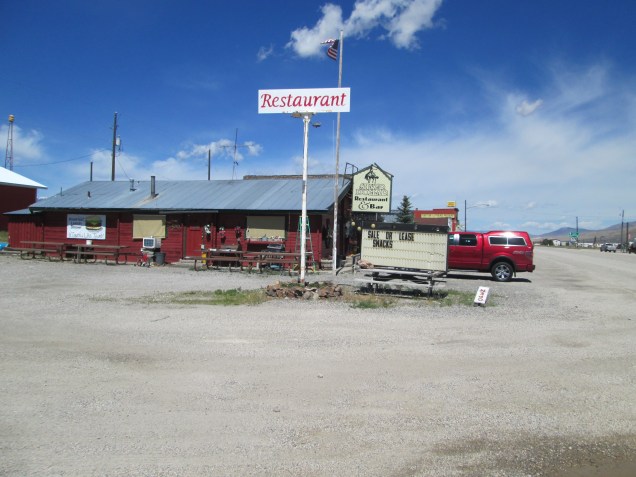
At lunchtime we stopped in a little town called Leadore (pronounced “led-ore”) which had its start when a Canadian entrepreneur built a smelter to process lead and silver ore for shipment to Salt Lake City. To the east were the Lemhi River and Beaverhead Mountain Range; to the West we’re the Lemhi National Forest and the Lemhi Mountains. There’s a little place called the Silver Dollar Bar and Restaurant across from the old rail depot (maybe Union Pacific) that is tended by a young woman who is waitress, hostess, cook and chief bottle washer. She is not to be trifled with: according to a long time patron sipping his coffee, she shot a big black bear when she was 12 years old. The bear has been stuffed and mounted in the bar – it glares at everyone who enters this establishment. She proudly took credit for it. We respectfully placed our order and enjoyed the company of the older patron’s company while we waited.
Ralph McCrea grew up in Leadore in company with the classroom friend he would later marry, 43 years ago. He is kind, friendly, likable and interested in good conversation as are many folks we’ve met. He is happy to share the history of his proud town and the richness of the Lemhi Valley. Ralph has had a varied life, working as a rancher, a driver, and for the US Forestry Service, first as a field hand, later as manager of the regional staff. His wife (I regret her name has slipped my mind) was a math teacher in Leadore Schools. When she and Ralph attended school in the ‘50’s and ‘60’s, there were about 250 kids in the K-12 district. When she started teaching in the early ‘70’s after being married there were fewer. Now there only 93. The declining population is a symptom of the disappearance of the mining/smelting/shipping industries that provided a lot of the reasons for people to settle here in the first place. The price for lead and silver are still too low to make reinvestment in new minds and smelters viable. So the means to make a living are to be found in ranching, some farming, service jobs in local institutions and federal government openings, all of which may require long commutes. Just doesn’t seem to be enough opportunity. The Silver Dollar restaurant seems to be another casualty as it is for sale. We’ve seen similar decline in many small towns in Wyoming and Idaho.
Ralph and his wife are retired now, so there’s opportunity to indulge their grandchildren. Ralph isn’t quite ready to totally give up working. When we met, he was dressed in hip waders that he uses to tend sluice channels for surface irrigation at his small ranch. The water is cold coming out of the mountains, he says, and the waders come in handy. He sounds a little wistful when he claimed he’s never used them for fishing since he bought them 20-some years ago. He is a strong proponent of surface, or gravity, irrigation. It does the job without requiring expensive sprayers, pumps and electrical costs. He made sense to this office worker from the east. When we met, he was killing some time before heading back out to close the open sluice and open the next in line. We are very fortunate to have met such a nice, kind, interesting man.
Leaving Leadore, we still had about 170 miles to go, so we got up and went. Another portion took us along the Nez Pierce National Historic Trail which follows the route taken by a large group of the Nez Pierce tribe in 1877 as they tried to escape the US Calvary and flee to Canada to avoid being forced to live on a reservation. They were not successful. Of the 800-plus Nez Pierce who left their homeland in what is now Oregon and western Idaho, many were killed in confrontations with the US Army. A small band made its way into what is now Yellowstone National Park. Their flight continued over the Absoroka Mountains into Montana where they were finally stopped about 40 miles from the Canadian border. Chief Joseph said, “From where the sun now stands, I will fight no more forever.” Some Nez Perce escaped to Canada, but after fierce fighting and a siege, the rest of the band surrendered on October 5 and most of the survivors were sent to the Indian Territory in Oklahoma. (Source: the National Park Service website.)
The several valleys we rode through were filled with ranches and farms. Lots of big horns, angus and guernseys. The wind was pretty gusty, so we were buffeted about some. We’re glad to be done for the day. An adult beverage or two goes down pretty good, and sets us up for the night’s rest. Tomorrow, it’s Rt. 12 and Lolo Pass. We’ll also be entering Pacific Time sometime in the morning.
Have a good night.
—-
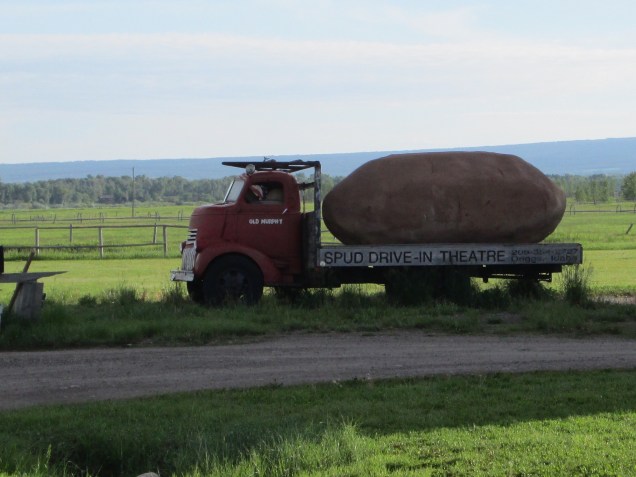
The “Spud” drive-in theatre. Very cool.
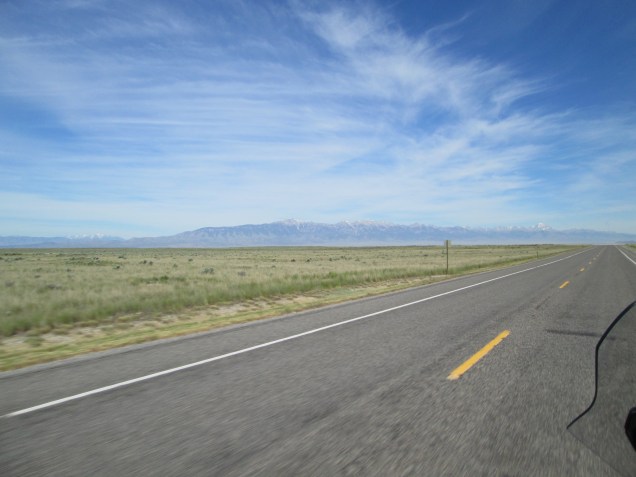
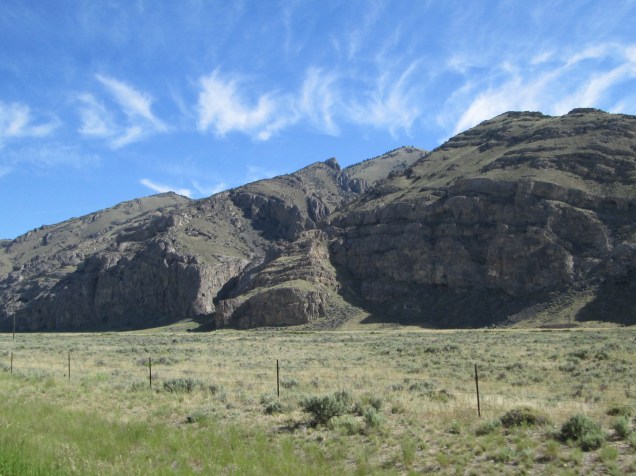
The first leg of our ride was through the now familiar semi-arid lands found in 3 bands stretching from North to South in the USA. The winds in this area are often strong. Notice the half buried, sod roofed barn.

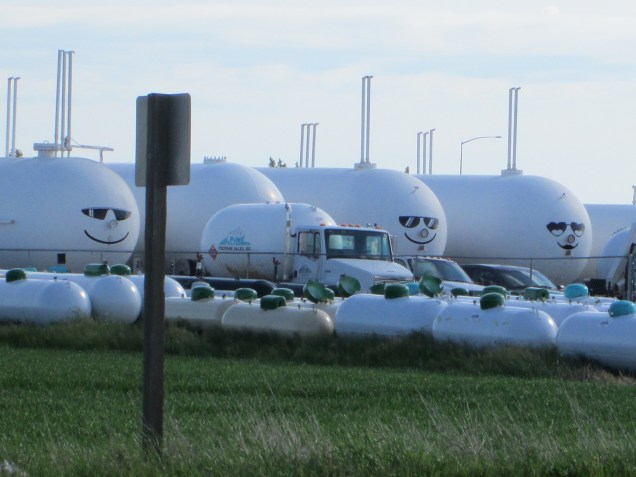
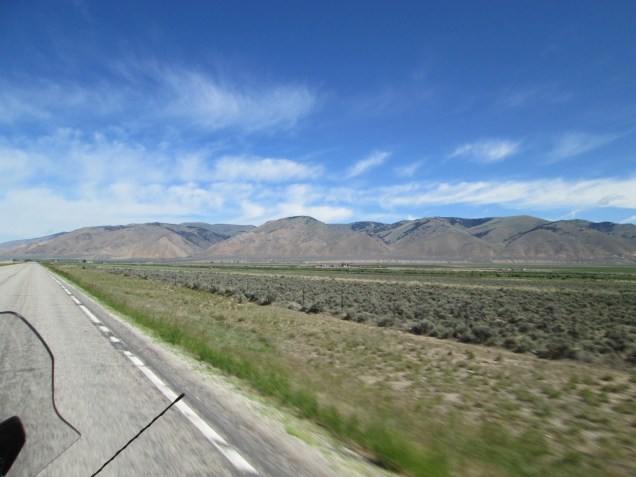

We rode portions of both the Sacajawea and Nez Pierce Historic Scenic Byways today.




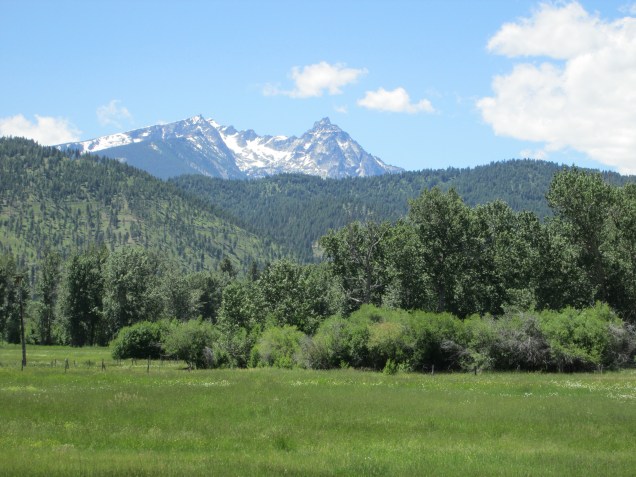
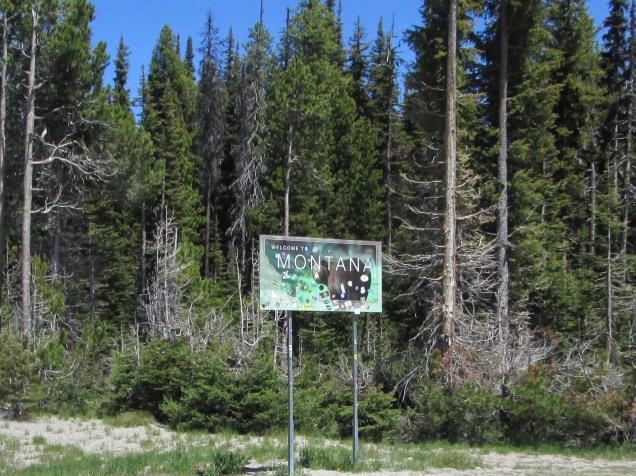
And we rode back into Montana. We’ll ride out tomorrow again and then in about a month, we will return.
 Wandering Retirees
Nice!!
Love ❤️ the photo’s
LikeLike
We’re trying. Internet service here is sketchy.
LikeLike