Today was all about Rocky Mountain National Park. It was established in 1915 by act of Congress due, in large part, to the advocacy of Enos Mills, a naturist and guide; and Mary King Sherman, an active resident of Estes Park, CO. Any number of companies and commercial concerns wanted the park to be designated a National Forest, under the administration of the US Forestry Service, which would allow mining and liberal logging for profit. The National Park designation, however, preserves the land in perpetuity so that future generations will have access to enjoy and learn in these pristine lands.
Native Americans were here long before all others. There have been some finds of ancient tools, pottery and rock construction that point to their early presence, as long as 10,000 or more years ago. More recently the Ute, Cheyenne and Arapaho people hunted seasonally here. Their movements may have worn the trail now known as the Trail Ridge Road (TRR), a stunningly impressive road that traverses the park roughly from east to west.
The TRR is often steep, sharply curved and climbs through distinctive kinds of terrain: from lush, wet forested land below 9,000 feet, to snowy land with spruce and fir trees up to 11,400 feet, to frozen tundra above the tree line up to 14,000 feet. The road climbs to just over 12,000 feet, but you really get the feel for the differences in each type of land.
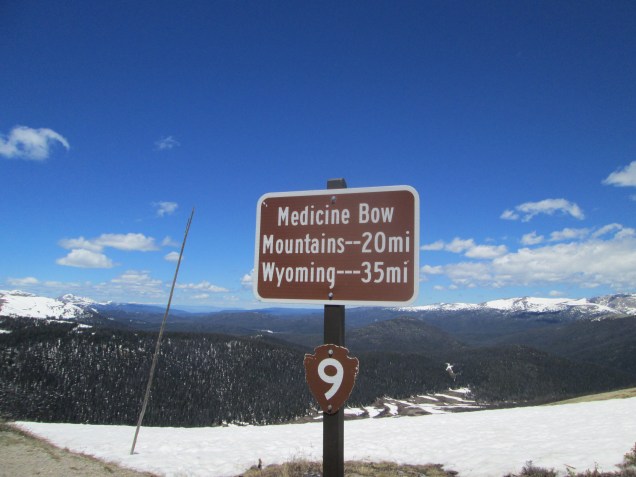
The going is slow and careful all along the 2-lane Trail Ridge Road, which explains why we covered only 85 miles in a over 5 hours. Seriously. Yet we wish it had taken us longer because there is so much there. There are plenty of turnouts and scenic overlooks where you can get off your seat and see the earth in its glory. At one overlook, for example, we were able to see a range of the Rockies called the Never Summer Range bout 20 miles away, and the Rockies that extend into Wyoming 35 miles north, all of which is true wilderness.
We saw some elk soon after arriving in the park – truly impressive animals who are bigger than you might imagine. Then there were the marmots, essentially large ground dwelling squirrels who inhabit the tundra above 11,400 feet. Relatives of groundhogs, they do all their active business in the 4 months of relative warmth from June to September, then hibernate the other 8 months because, frankly, it is brutally cold up there. While they’re out and about, they are foraging like crazy, and reproducing of course, and totally unconcerned about humans or much of anything else. Very cute, they are.
Just a note: the road can seem a little hairy at times. There are switchbacks and other tight corners, and sometimes there are no guardrails along the way. But a reasonable speed (slow!) and full attention will get you through in good shape. What I’m saying is that it’s not really difficult driving, and the experience is fully worth it. Don’t be afraid if you ever have the chance.
That’s all for tonight. More tomorrow.
—
Well Hello!

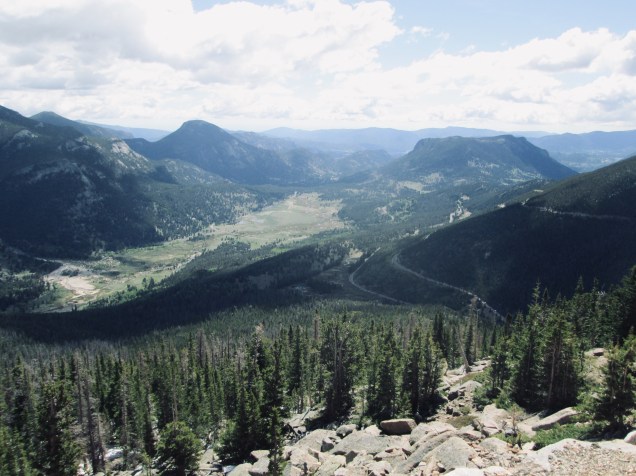
The Tundra and Yellow Bellied Marmots on Trail Ridge Road


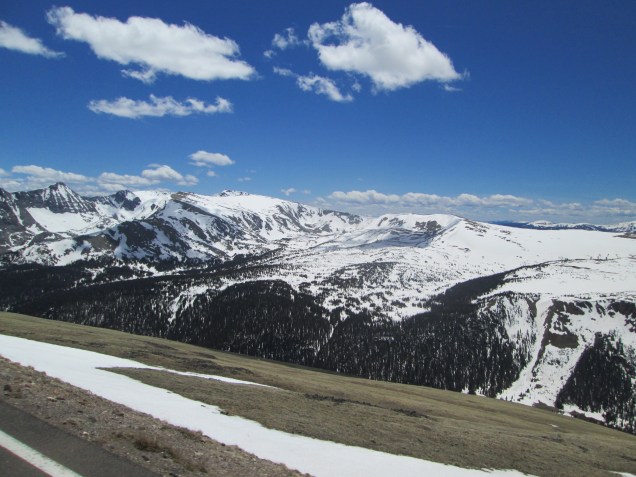
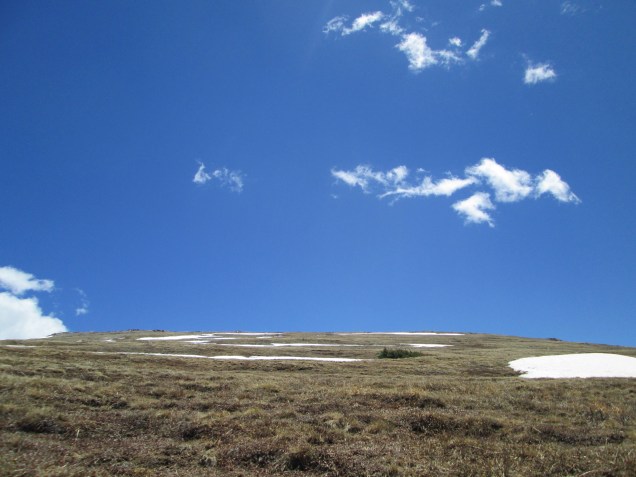
Looking down at the tree line from the tundra.
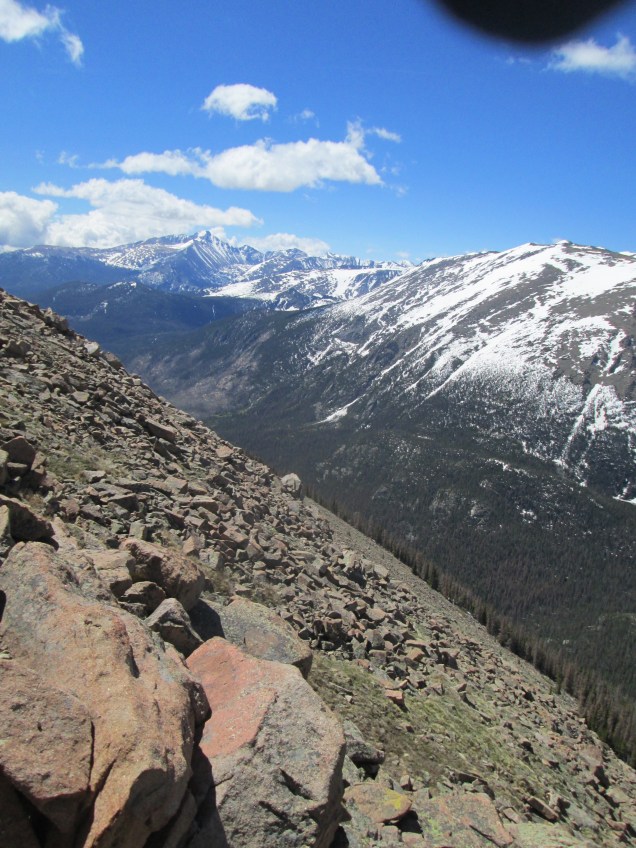
Beautiful vistas. Way out in the distance is the Never Summer mountain range.
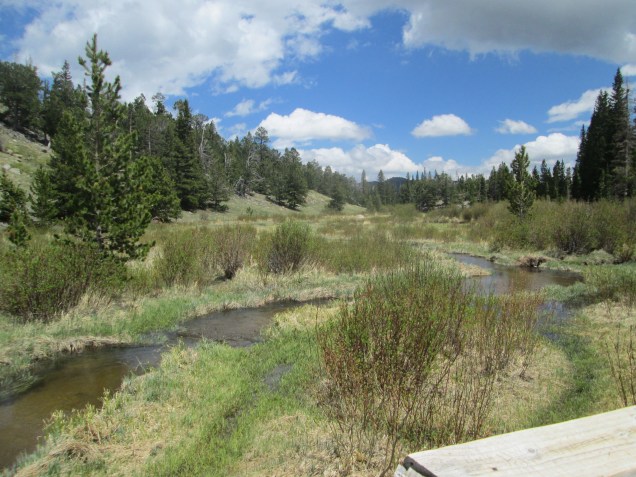
A short walk into some wetlands to finish our day.
 Wandering Retirees
Thanks. Great pictures!
LikeLike
Beautiful!!
LikeLike