Day 44 – 46 – July 14th to 16th

Sunday, July 14th

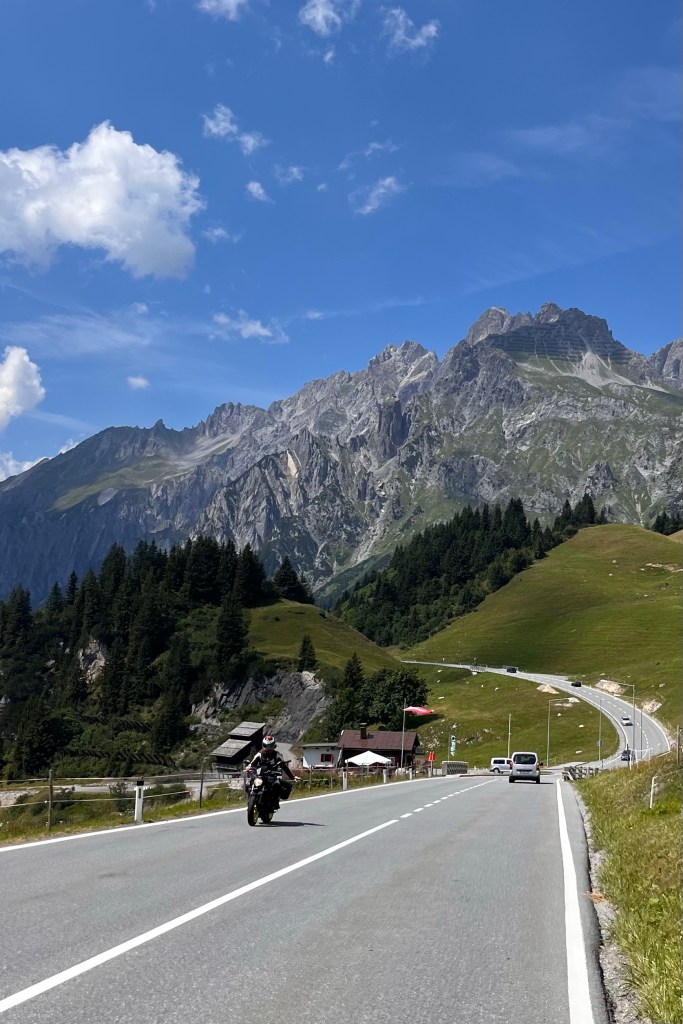
Today was a travel day. Mostly. After resting a bit yesterday, we packed up early and rode south to Waterton Park, part of the Canadian National Park System. Our ride took us through some pretty mountain valleys and forest preserves along Rt 1A, Rt. 22, Rtes. 3, 6 and 5 into Waterton Village. The terrain looked a lot like Montana and Wyoming across the border to the south, and there was an abundance of ranch land. We saw so many signs cautioning us that mountain goats, sheep, bears, moose, deer and caribou may cross the road over the next 24 kilometers, or 13 kilometers, so forth. (We even stopped for a trio of mountain goats who stared at us from the yellow lines before reluctantly ceding the macadam.). Add to that the advisory that cattle could be found on the road – “Stock Is Free Range”, and we had to maintain a modest speed to be safe.
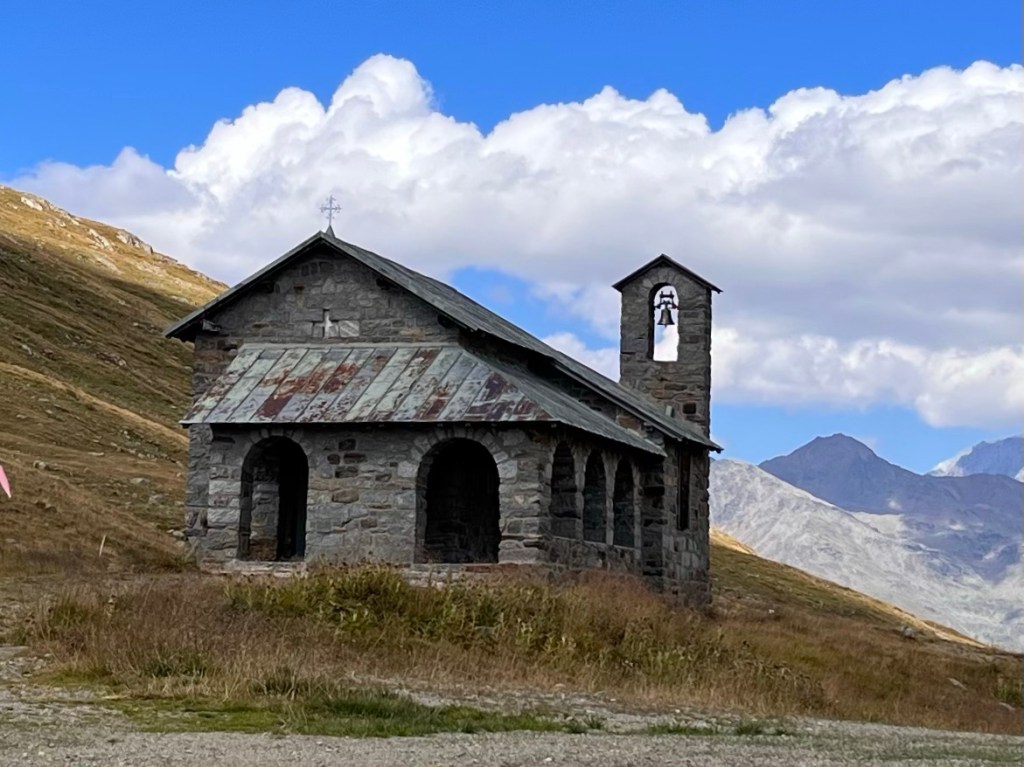
We wound up taking a wrong turn (inevitable) onto Rt 3 toward Crowsnest, AB and rode into the lot of the Leitch Collieries for a u-turn. It looked interesting so we got off the bike and investigated. At the turn of the 20th century, a Canadian consortium tried to exploit the coal deposits in the northwest provinces. It was a huge undertaking because development required creating routes in and out of the area for trucks and rail lines to haul cargo. That meant enticing trained and skilled people, artisans, engineers, masons, and miners, to move to this isolated place with a sometimes forbidding climate and build the mines, storage bunkers, coke ovens, rail lines and depots, and all the infrastructure needed to get this industry off the ground. The Leitch Collieries ultimately failed not long after WWI after a number of accidents and a fluctuating commodities market, but not for a lack of will. It’s a fascinating story.

Anyway, we got ourselves turned the right way and scampered into Waterton Village mid-afternoon. It is an adorable town that’s built on Waterton Lake and sees thousands of tourists each year. During peak tourist season (July and August), the full time residents number about 250; by December they number under 50 (very durable) folks. We took a tour boat ride this evening with three of those folks as crew. They have so much to tell and show. The boat is the MV International of US registry and holds up to 160 people. The cruise took us south along the shore to the American end of the lake at Goat Haunt, administered by the National Park Service. The site was closed because the NPS has not received sufficient funding to staff and maintain the camp. (Sad) About midway down the lake, we saw a straight cut through the trees on both sides that marks the Canadian/US border. It’s pretty rugged terrain! We had our eyes peeled for wildlife and were rewarded with a majestic bald eagle surveying his domain from a perch in a tall pine. The cruise is a little pricey, but it was worth it because we learned so much and enjoyed the ride thoroughly.

Waterton Lakes National Park is the northern half of the Waterton-Glacier International Peace Park, created by act of the US Congress and the Canadian Parliament in 1932. Signed into law by President Herbert Hoover and Canadian Prime Minister Richard Bennet, the combined park made sense because both areas included the same mountain range and both have nearly identical biological and ecological systems. Caring for the parks could be cooperatively managed, particularly in the event of emergencies. Like wildfires. Waterton alone has suffered three large wildfires over the past three years, with the Kenow fire in 2017 being particularly bad. The folks we spoke to were very grateful for the resources the US deployed to help Canadian firefighters control that blaze. The Village and some Glacier Park assets were spared because of their combined efforts. Now, two years later, we can still see the destruction to the local forests even as new growth rises.

In 1995, the UN (UNESCO) declared the combined Waterton Glacier International Peace Park a World Heritage site because of its uniquely beautiful environment and biological significance.

After the cruise, we came back to the cute cottage where we stayed and had to pause a moment. There was a doe just outside our front door who clearly felt this was her turf. Mostly she grazed and paid us no never mind. She even allowed us to come fairly close and we got some pics.

After a few minutes we headed back out to stargaze. Waterton Park is also an International Dark Sky Preserve with strict rules limiting night time illumination. The sky is clear and we had some great viewing without leaving town.

One final note: our one frustration with our time in the National Parks of both the US and Canada has been the lack of WiFi/internet service. That has made our data-intensive posts very difficult to upload. When you’re able to read this, please know we’re late not for lack of trying. Your reads and comments are so rewarding. We thank you, friends!

Monday, July 15th

Today we had a great time just wandering around this pretty little village, enjoying the sun, the kitschy shops and a breezy (30 mph) lakeshore stroll. We ate VERY well and kept on rolling. Eating is pretty expensive here: a large drip coffee is $3.00 Canadian ($2.25 US) and a delicious plate of ribs is $40.00 Canadian ($30.00 US). You get the picture. If you’re going to stay here for more than a couple of days, you definitely want to shop for groceries outside the park and tote them in. (But you have to try the ribs or the brisket – they are fabulous!)

No riding today. Just relaxation, eating fattening food and a good night’s sleep.

Tuesday, July 16th

This morning we left Canada and entered the US at Chief Mountain Port of Entry. It was nice to re-enter the States, though we found the surly attitude of the US border officers disappointing. Even with Global Entry passes (passports, too) it was clear we were an inconvenience to be endured and dismissed. There is a place for efficiency, for sure; but rudeness, no. Particularly from the very first people a guest meets when entering our country. And there was no line of cars waiting. I hope it was just a bad day.

We rode through the eastern part of Glacier National Park and enjoyed our ride. We stopped at one of those roadside attractions that promises great authentic Blackfeet Tribe souvenirs, weekly bull riding and good eats. There was a portable taco stand called “Wandering Gringos”. They were quite busy, which is amazing since only a few cars pass along the road every few minutes. So we had to try it. We split a “burrito supremo” with all the fixings for $10.50 plus tax. When it came out, it weighed at least a pound-and-a-half. It was fabulous! Not only tasty but in the way it “sticks to your ribs.” My ribs are still plastered with this gustatory extravaganza. We ate at 1:30 and it’s now 8:30 – hunger is not in my vocabulary.

Tomorrow, we will ride the Going to the Sun Road through Glacier. It’s one of the iconic motorcycle rides in the US. So, a Brioschi and then to bed because tomorrow we ride.

Evening Cruise at Lake Waterton

Sunset in Lake Waterton

International Peace Park: Waterton Glacier

Evidence of a Massive Fire in Waterton Park in 2017

Beautiful Scenery and Lovely Walks

Hanging Out on the Iconic Red Adirondack Chairs

Traveling Back Into the USA to … Montana (this is the 3rd time we visited Montana on this trip!)

Mountains to Prairie and Back Again

A Roadside Food Truck Selling Mexican Food: The Wandering Gringo!

Day 41 to 43 – July 11th to 14

Sorry for the delays. WIFI is not as available.

Thursday the 11th

We got an early start this morning and left Jasper, AB, for the Icefields Parkway, (Rt 93 South) toward Lake Louise. The parkway reaches 282 kilometers to Lake Louise, about 2-1/2 hours as a straight shot along the route of the Continental Divide. Of course we couldn’t do that. We stopped at the Athabasca Falls which is fed by runoff from the glacier of the same name. Unlike most rivers flowing from the Continental Divide, the Athabasca River flows north, not east or west, ultimately joining with other rivers to reach the Arctic Ocean at Inuvik in the Northwest Territories almost 2,000 miles away.

The water is milky white, a suspension resulting from rock being ground to fine powder under a glaciers immense weight. This powder, sometimes called glacier flour, infuses huge quantities of water from glacier melt off. While there, we met up with a tour group composed of Old Order Mennonites. Not some thing we’ve seen often.

Our next stop was Sunwapta Falls, which roars through a deep gorge that has been cut over tens of thousands of years. This water was clearer having less glacier flour.

The Columbia Icefield, about half-way down the Parkway, is a collection of glaciers to the east of Mt. Columbia. Several glaciers are on prominent display, including the glacier from Mt. Athabasca. The glaciers have been receding for many years. We parked several hundred yards closer than its farthest known progress as of 1908, and then hiked for a kilometer in past multiple markers that show its retreat up through today. One marker denoting it’s reach as of 1982 is almost 400 yards from the present glacier’s edge.

The environment below a glacier is stark, rocky and quite raw. The wind off glaciers is called “katabatic” wind and is very strong and very cold. All those millions of tons of ice cool the air above it quickly, and because cold air is denser than warmer air, the air streams down and off the glacier at a great rate. Though the ambient temperature outside the park was around 55*F, the wind off the ice was close to freezing. So folks who were hiking wearing jackets appeared happy to move briskly. Those with shorts were not so happy and just plain ran. We found the hike interesting and severely beautiful. Of course we were dressed still in our riding gear and long John’s and extra socks.

We ultimately stopped at a dozen or more turnouts to see the sights. Waterfalls are a constant temptation and we indulged early and often regardless of size.

By afternoon we passed out of Jasper Nat’l Park into Banff Nat’l Park. We felt we were close to being done for the day and arrived at our hotel in Lake Louise Village to rest up. Unfortunately my brother and sister-in-law, Jeff and Rose, could not make it as we had hoped. Something unexpected came up so they had to cancel. They are wonderful company and we will miss our time together very much.

Friday the 12th

At 6:30 this morning we caught a shuttle to the Lake Louise Ski Area to take a gondola to near the top of the mountain to see what we could see. (This came highly recommended.) It was awesome! Connie had snagged our tickets in advance so we made our way to the lift, which took us up beautiful scenery and a mother grizzly and her cubs. Up and down the line, everyone was excitedly calling out to each other and taking pictures of the trio. It should be noted that the stars of the show acted as though they couldn’t care less. They were busy chowing down on some vegetation, the cubs were wrestling and playing like youngsters do. It was a bit unreal as well: we humans, members of the dominant species on earth, were thrilled and happy to see these apex predators of the Canadian Rockies, but only because we were viewing from a safe height. The matter would be somewhat changed if we’re were on even ground. Interesting.

We unloaded up top and were treated to more awesomeness as Lake Louise and its surrounding mountains were laid out before us. The highest peak is Mt. Temple at the center of a row of majestic peaks and glaciers. We walked a bit then had something to eat on the outdoor terrace of the mountainside restaurant. A bit pricey, but a worthwhile extravagance. While up there we saw the same grizzly and cubs down slope a ways, on the other side of an electric fence. Bears are taken seriously here. On the way down we were lucky enough to see another mother grizzly with two cubs. Amazing!

We got back to our room at the Mountaineer Lodge in town by mid-afternoon and rested for a couple of hours. Then after our sumptuous repast of bagged salad and assorted sides we got on the bike and headed to Lake Moraine for a walk along the shore trail. We arrived around 7:00 pm after the crowds had dispersed.

That’s a real issue in Banff Park. Because it’s so popular, there can be substantial crowds during the day and parking can be an issue. Using the shuttles or arriving very early or late helps. For us, riding on a bike makes parking much easier, though we try to avoid peak times.

Lake Moraine is a glacially fed lake located in the Valley of Ten Peaks. The lake is cupped by this ring of mountains and it is so beautiful. There are a couple of small glaciers up high, and a lot of evidence of ice and rock avalanches. We spent nearly three hours walking and gawking and taking pictures until sunset (10 pm) moved us to ride back. We think Lake Moraine is more beautiful than its famous cousin, Lake Louise. Just saying.

Saturday the 13th

We got ourselves launched early again and rode to Lake Louise. Though we were on our way by 6:30 (before coffee, I might add) and we were about 900th in line to get into the parking lot. There were bike spots laid out so it worked quite well. We brought coffee and a nosh from our hotel and quickly ate, which both improved our frame of mind and opened our eyes fully. The canoe rental shop had just opened and there were a couple of boats making their way to the far end of the lake. The water was very still allowing the mountains’ reflection to show clear. It was beautiful! We hiked a bit on the east side and treated ourselves to about a hundred more shots. We just don’t tire of snow covered peaks.

That’s how we spent our day until the afternoon. By then we were a bit worn out and decided to rest up before our long ride tomorrow. There are so many other places we would have loved to see here in Banff, like Peyto Lake, Bow Lake, Thompson Canyon. Those will have to be stops on our next trip here.

Now, we hope this uploads. Here’s to mountain WiFi.

Morning safety check

Abathasca Falls, Jasper National Park

Abathasca Glacier, Jasper National Park

Beautiful views along our way. And a bear on the roadside.

Banff National Park

Gondola Ride Overlooking Lake Louise, Banff National Park

Moraine Lake in the evening, Banff National Park

Hiking Around Lake Louise, Banff National Park

Day 40 – July 10

40 days and 40 nights…

Today was our last full day in Jasper, AB, and we continued our leisurely pace by lounging until 8:30. We had breakfast with Mike from Chicago (still didn’t get his last name!) and saw him off to Prince George, BC on his way to the AlCan Highway and Alaska. For our part, we set off for Maligne Lake within Jasper Nat’l Park. It’s another one of those trips that looks brief but isn’t. According to Google Maps, it is 47 kms, about 28 miles, which might take an hour. That prediction does not include stops for pictures, stops for caribou, so forth. In fact, we spent almost 4 hours heading into the park though the delays were mostly self inflicted. We had the pleasure of sharing the road in with a trio of young caribou who couldn’t seem to decide which side to take.

The road we were following, predictably called Maligne Lake Road, took us by some gorgeous lakes and streams, including the Abathasca River, and the Maligne River that connects a couple of lakes in the north park. The Maligne River got its name from a French Jesuit explorer who thought the trouble the river gave him was wicked or evil: hence the name “Maligne”. The Maligne River has cut its was through bedrock to make a steep, narrow Canyon we reached by a nicely laid out trail. The river then goes underground before emptying into Medicine Lake. The view of the rushing water snarling through the narrow defile dozens of feet below is so striking. At one point, we saw a heart-shaped rock the size of a VW Bug wedged between the lips of the narrow canyon. Yes, Connie got the pic.

We climbed back on Shiny and rode by Medicine Lake, which has a number of islands near its eastern shore that host bald eagle nests. (They look more like airborne condominiums than nests, but I digress.) We didn’t get a pic of the adolescents (they did not yet have the white cap of full adults) but it was impressive. Also impressive was the size of the sheer mountain cliff that lined the road, with signs abjuring us not to stop due to avalanches. It was also clear that there have been big wildfires recently that wiped out large tracts of trees. We chose to heed the warnings and move along without pause..

At last we arrived at Maligne Lake where we took another nice little hike to the shoreline. The first white person to sight the lake was Mary Schaffer, an artist from Philadelphia who rode north with some friends in 1907 and 1908. She was looking for a remote lake called Chaba Imne by the First Nation people. She called it Maligne Lake after the river and explored its shores on lengthy raft expeditions. It’s a beautiful alpine lake that attracts a lot of tourists today. One question that comes to mind is, What drove this Philly woman to wind up so far from home? Is this intrepid explorer recognized in her native city? Inquiring minds want to know. (This brings to mind beloved cheesesteaks and sticky buns. I’m hungry.)

On the road back to Jasper, we were treated to wonderful vistas that revolved around – yes, mountains. Connie got a couple of spectacular shots of our road to the mountains.

Of course we met some folks today who piqued our interest. James and Lisa were visiting Maligne Lake with their pup, Maya. They live near Calgary and are retracing the steps of their honeymoon vacation after 30 years. They were so happy to suggest good spots to visit in and near Banff to folks who were all ears. (Apropos of nothing whatever, did you hear that Ross Perot recently died?) They were eager to hear our thoughts on their country and recent events in the US and the joys of riding in the rain, and so forth.) We had a great visit with them, and we think they felt the same. Oh, and while we were gabbing a big black bear came into view about 200 yards away. Everyone was excited. Including the folks much closer who were running away. Interesting how a large carnivore can generate so much energy.

Tomorrow morning early, we’re heading south on the Icefields Parkway and Banff. Can’t wait to see what tomorrow brings.

Maligne Canyon

Maligne Lake

Medicine Lake

Day 39 – July 9th

Today was a leisurely, fun day. We slept in a bit then headed into Jasper Nat’l Park to the south on Alberta Rt 93, ostensibly to find a trail that leads to “Edge of the World.” We had a lovely ride to get to the vicinity of the trail located, we were told, on the road to the Marmot Basin ski resort. Found the road, check. Rode 7.6 km to where the trailhead is located, check. Could we find it? That would be no. We walked and hunted and asked passers-by, but no luck. Oh, well. Fun ride, fun walk, but the world’s edge was an elusive quarry.

Alberta Rt 93 is called the “Icefields Parkway” runs 232 kilometers (144 miles) along the Continental Divide from Jasper to Lake Louise, Alberta at its south end. In addition to Jasper Nat’l Park in the north, Banff Nat’l Park encompasses the southern half. The parks are famous for their majestic mountains, glaciers and rivers. There are lots of campsites and fabulous hikes mapped out of all lengths and levels of difficulty.

We took a couple of short hikes at our next stop, Mt. Edith Cavell. Turning on a side road off Rt 93, we climbed quite a ways into the forest above on Cavell Road. The ride was 14 km (8.5 miles) and took us a half hour. Lots of twists and switchbacks;and trailers are prohibited (yea!). The posted speed for most sharp bends is 15 or 20 kph. That’s 8 to 12 mph, and the road warranted those speeds. So long as you’re not in a big hurry, it’s lots of fun.

There are several turnouts for great views of the Astoria Valley with glaciers at its head, the obligatory bridge over the rushing stream, and finally the parking area for Mt. Edith Cavell. The mountain is named for a famous Canadian nurse who cared for many hundreds of Allied soldiers during WWI. A short hike up a good path took us to an overlook of the mountain and two glaciers: the Cavell Glacier with clearly layered ice, and Angel Glacier that looked like it had wings. Cavell Pond lays below the sheer north face of the mountain, and right under the Cavell Glacier. There are bergs floating in the pond that calved recently, and there are warnings to stay clear of the pond: frequent falling ice bergs the size of houses cause flash flooding that can sweep an unwary hiker away. Recent warming trends have melted a large Glacier that covered the entire area until recently, and fragile sub-Alpine flowers and plants are slowly taking hold now. Cavell Glacier and Angel Glacier are all that remain in this spot.

We had a little picnic at our overlook and took a ton of pictures. Hope you enjoy them. About mid-afternoon we packed up and returned to our bike. A nice ride back to Jasper, a stop at the grocery store, then to the room for a nap. That’s right. We took a nap, the epitome of decadence, before supper with our friend, Mike. Tomorrow, he heads out toward Alaska while we head back into Jasper Park for more mountains. And glaciers. And the obligatory bridges over rushing water. Rough life.

Beauty at every turn.

Flowers, some cultivated and some not

Glaciers of Mount Edith Cavell

Day 38 – July 8th

Today was a nice travel day to Jasper, Alberta, at the top of the Icefield Parkway through Jasper National (Canadian), the northernmost point of our trip. Our route up BC 5 took us through a myriad of small towns , some incorporated and others not. All had the feel of places gratefully soaking up the nearly summer like temperatures: highs in the 60’s so far. That’s summer weather up here, by the way. We have had a lot of rain lately. Though the views would be better in sunlight, the folks up here are grateful for the rain. Winters have been a little warmer recently with less snow pack, thus less moisture later in the year, thus more wildfires of late. Rain is better.

We met some wonderful people today. (They’re out there if you look.) Bill (I think) and Daisy run a small snack stand in Avola, BC, a tiny unincorporated town of not many souls. We had a nice lunch and lots of great conversation. Bill works for the Province as a plow driver during winter and is self employed as an everything man the rest of the year. He showed us about a dozen projects he currently has underway. He also was a font of knowledge for the miles that were still ahead. He waxed poetic about Mt. Robeson, the tallest peak in British Columbia – Connie got a number of shots of this spectacular mountain. We both thought Bill was a doppelgänger of Phil, a family friend, but I digress again. Daisy is the heart of the establishment (cook and chief bottle washer) who is just returned from a visit to family in China. I think it must be tough sometimes to make a new life in a new land while having loved ones left behind. We think Daisy and Bill will be successful. (Bill: if I’ve gotten your name wrong, please contact me so I can fix. Thanks.)

The ride today had its moments. We nearly ran out of gas. That’s because the appearance of a town on the map does not necessarily mean that there are gas stations, stores, or even people there. Meeting a sign that warns there is no gas for the next 60 miles (100km) when you have about 40 miles worth of gas left gets your attention. Fancy powerful bikes require regular infusions of fuel. Fortunately, when we saw the sign we were able to reverse course and coast into the station a ways back. The proprietor had that look that says he sees a lot of folk coast back in. He prices his fuel,accordingly. PT Barnum would be proud.

We pulled into Jasper and checked into our hotel, a really cute place called the Tonquin Inn. We met Mike, a man from Chicago about our age who is about 9 days into a trip that will ultimately take him to Alaska via the Can-Am Highway. We started talking because we have the same model bike and our conversation took us through cocktails and dinner. He shared a terrific book that highlights the ride to Alaska and, we’re happy to say, it looks really inviting. He is a retired HR/Personnel Director for a national supermarket group and a font of terrific stories. He also recently toured by bike in New Zealand. Amazing. Turns out we dined next to a couple who are celebrating their 42nd (or is it 43rd) anniversary by traveling by car to Alaska from their home in Scottsdale, AZ – today is their 57th day on the road. Lots of great stories and wonderful time.

A note that comes to mind. Connie and I were chatting by intercom today and realized we need to think of more words to describe the land we’re riding through. “Wow”, “beautiful”, “amazing”, so forth are just wearing out from over use. This is a spectacular land, that neither picture nor word can adequately describe. I’m not often at a loss for words, but these days I am. What wonders of creation!

Tomorrow we hope to make some rounds about the northern reaches of the Ice Fields. Let’s see what the new day brings. Have a good night.

Oh, we’re now back in Mountain Time, only 2 hours difference from the Eastern Timezone.

Bill and Daisy. They were so nice to talk with.

Beautiful Rockies. Remember the song “Rocky Mountain High?”

Mt. Robson – Highest Peak in Canada

Days 36-40 – July 3-7

A running commentary on July 3rd to the 7th

Tonight we’re resting in Kamloops, British Columbia, in a hotel that has WiFi (at last) that enables us to post again. Our last post took us through our arrival in Nanaimo, Victoria Island on the 2nd. On the 3rd, it was decided that everyone needed a break. So we all took one, each in our own way. Connie, Pat and Judy did a few errands and then lounged around the cute cabin we’d rented. They report it was perfect, with lots of chances to talk and shmooze and whatever. I am very happy for them to be sure. I set off on a solo ride along the north shoreline, and then cut across to Port Alberni on the west coast. On the way I stopped at Cathedral Grove, a small park within MacMillan Provincial Park on Rt. 4. The oldest Douglas Firs are more than 800 years old and create a towering canopy that is both quiet and vibrant. People walk quietly and speak in hushed tones. It truly has the feel of a sacred space.

Port Alberni has been an important outlet for the logging industry since the mid-1800’s. It also was an important safe haven for merchant vessels during the 2nd World War from Japanese and German submarines. The town is proud of its heritage, though it’s not quite so busy these days. There is an inviting shipboard B&B docked on the quay with 7 staterooms available. I think it’s very cool. Anyway, it was a great day’s ride and very relaxing.

On Thursday, the 4th, (Happy Independence Day – belated) Pat and Connie went to Pipers Point and walked the shore. Then they hung around Georgia Park waiting for Judy and I to return. Judy and I went to Newcastle Island, traditional home to the First Nation people, the S’nanaimo, who call it Saysutshun. The island does double duty as a Provincial Marine Park, and a sacred space for the S’nanaimo. We took a guided tour of the island, and our guide, a member of the tribe, shared a ton of history and important stories from their past. It was fascinating and fun. We all met for supper I downtown at a Thai restaurant while a city fair was going on around us. It was a wonderful day.

On Friday the 5th, we went to Victoria to visit the Royal Museum which has a fabulous First Nation exhibit; then we took a whale watching cruise and saw a number of pods of Orcas (killer whales) and one humongous humpback whale. We feasted in town and got home late. Long day but really good.

Yesterday, the 6th, we had to part ways again. Connie and I took a ferry for Vancouver while Judy and Pat caught a ferry to Tsawassen – Pat to catch her flight and Judy to drive home to Eureka, CA. It was sad to part ways, but we had such a good time being together and sharing our experiences. Pat we’ll see again soon; Judy we hope to see next in November.

So, we spent the night in Vancouver , BC, just next to Stanley Park on the west side. The city is beautiful, though we didn’t see a lot of it. We met Gloria who lives near the hotel where we stayed, and she gave us wonderful ideas for a walk and some dining spots. We wound up having sushi on the water and it was fabulous, I’ve never had better. Our hotel was a turn of the century pension (last century) and had fairly awful WiFi, hence no post yesterday.

Today, Connie and I were up and at’em some time before the sun came up in Hawaii and on our way north, deep into the Canadian Rockies. Our goal was Kamloops via Whistler and Lilooet on BC Rt 99. An amazing road with amazing scenery at every turn. Didn’t matter that it rained most of the way up: boiling rivers cutting through narrow, steep canyons; waterfalls on both sides and clouds steaming from illside forests like the Great Smokey Mountains in NC. The only hitch was a wrong turn in Lilooet that led us down a lonely road deep into a First Nation reservation. We spent an hour going out of our way through a lot of pristine beauty. We suffered nobly.

Along the way we saw a huge Canadian National Railway train moving along a beautiful lake but in the shadow of a 2,000 foot cliff. A striking view that we saved for a family train lover.

Another note: we saw a lot of evidence of avalanches on our ride. The warning signs prohibiting stops in highly dangerous areas, huge retaining walls, and numbers of rocks that rolled onto the roadside were also valuable hints. It’s a reminder that these mountains are relatively young, and still going through periods of fairly quick erosion. Which has an effect on human-type activity. There are a lot of provincial road crews out there all the time making repairs, and the infrastructure shows some savvy decisions. For example, on our ride along several back roads, we crossed wooden bridges in avalanche zones. We thought this odd until we realized a wooden bridge can be repaired or replaced a lot quicker and more cheaply than a steel and concrete structure. An unexpected local answer that works.

To our rider friends, we have found no better riding than here. Put this on your list.

Well, tomorrow it’s north and east to Jasper, Alberta for a three night stay. Our route will take us through more mountains. Oh, can we stand the strain.

Hank’s meander while the women did chores and chilled out.

800 yr old trees

Floating BnB in Port Alberni

Nanaimo’s Georgia Park

Hank and Judy’s trip to Newcastle Island and a private nature tour

Whale watching

Our boat

Orcas (Killer Whales)

A Coffee Stop for the crew of a Zodiac whale watching boat

Saying Good-Bye to Mom and Judy (an early morning event after a night of celebrating – we are all bleary eyed).

Limited site seeing in Vancouver and a very early bedtime for us.

Very scenic travels to Kamloops, BC (a waypoint)

Yes, everything including the water, was green. Beautiful.

Incredible

A train travels along the lake.

We got lost. So awful. Not.

Looking back on our “wrong” turn.

Random beauty.

Day 32 – July 2nd

Nanaimo, British Columbia

Quick update tonight. We had a cool, wet ride from LaPush, WA to Nanaimo, BC via US 101 and the Black Ball ferry from Port Angeles to Victoria, BC. Not much to say except it was a cool wet ride. Fortunately the weather cleared as we approached Nanaimo on the northern coast of Vancouver Island and it looks to be good weather for the next few days.

We met some really neat people on the 1-1/2 hour ferry ride. Rick and Jamie are Harley riders who call Nanaimo their home. Rick is owner of a tire shop in town, which keeps him so busy he doesn’t get out to ride as often as they’d like; and Jamie is a home care coordinator with the Canadian Government for older citizens and to help them stay independent in their own homes as long as possible. She says she finds it really satisfying and is glad for her work. They were so friendly and helpful, seeing that we’re visiting their city for the first time. We would really enjoy meeting them again some time.

We met another couple from Nanaimo who were also traveling by bike. They each rode their own dual purpose bikes (on and off road). It was the woman’s first extended trip which is very exciting. We’re sorry to say we didn’t catch their names, but they were very kind in suggesting special spots to visit while here.

Another rider is Doug from Sonoma, CA. He’s riding solo on an extended trip through the Northwest US and BC, Canada. Doug is a retired Alaska marine harbor pilot who is licensed as a Ship’s Master, any tonnage, any ocean. He’s understandably proud of his accomplishments and his 50 years of service to the merchant marine. He is now in his 70’s and loving large. And does he have stories!

We are so glad we met these folks – it made the travel day so much more enjoyable.

So, not so much to tell except that we are safely at our new destination and glad for the chance to discover what this special area has to offer. Access to the internet is spotty at best. We have no idea when this will be uploaded, but we’ll do our best.

More tomorrow.

Except for poor road signage, Victoria, BC was so welcoming.

Day 31 – July 1st

It was a beautiful day in the neighborhood. We made an excursion to the Hoh Valley Rain Forest, one of the seven wonders of Washington State, about 50 miles away. Connie and I led the way on our bike while Judy, her cat and Pat bounced along after us. A fun ride.

Hoh Rain Forest is one of the few temperate (not tropical and swelteringly hot) rain forests in the world. Like it’s name, Hoh Rain Forest historically has gotten about 240 inches of rain per year, though it’s been declining in recent years. There is concern for how the forest will cope with a warming climate.

We hiked/strolled along a nice trail called the Hall of Mosses (I first saw “Moses” and though of parting seas of flowers, so forth) that features a panoply of plants, big and small. Judy, who lived in Washington until recently, was a wonderful guide, especially to the native species. And some were spectacular! The largest were the Sitka Spruce and Western Hemlock which can be 1,000 years old in the park, reach 300 feet high and seven feet in diameter. The life cycle of these goliaths is fascinating. When a giant falls, it naturally begins to decay and break down into its constituent nutrients. Eventually, shoots and seedlings take root in the fallen body and begin to grow, competing with other small plants for nutrients and sunlight. The decaying tree is considered a “nurse” tree to all who depend on it. The shoots bide their time, growing slowly in the remains of the nurse tree until another giant falls, creating a gap in the canopy that allows more sunlight to reach the forest floor. With more light it’s off to the races with the swiftest, strongest and luckiest young trees making it to tall adulthood. Eventually, the nurse tree is totally used up, leaving an impressive array of roots visible above ground. And the cycle repeats again and again.

The Hall of Mosses gets its name from the impressive mats of lichen and mosses that adorn nearly every tree. It made me think of Spanish Moss in the south, but it doesn’t drape so thickly up here. The moss attaches itself to the tree, but is not a parasite that relies on the tree for sustenance. Rather, it makes its living on the mist and fog and the particulate matter that is suspended in the moist air. In the right light, it looks stunning and a bit eerie.

When we got home we indulged in some dinner and beverages, and have started packing for our journey to our next destination. You may remember what I said about unpacked belongings scurrying to hide-holes everywhere. Well, we’re hunting and gathering now. Tomorrow it’s on to Nanaimo on Vancouver Island, BC via the ferry from Port Angelis, WA. Should be fun!

I seriously cannot wait for good, fast internet. #spoiled #firstworldproblems

Day 30 – June 30th

Today was super relaxed. Connie and I walked the south-facing beach in front of our lodgings this morning. On top of the wonderful sounds and smells of the shore, there’s a great abundance of drift wood. That’s stating it too mildly. There’s a veritable forest of washed up trees strewn everywhere along the high water line: trees that were undercut along riverbanks and numbered trees that got away from loggers. They’re all here in their gigantic, bleached-bone glory. It’s beautiful and a little bit eerie. There are islands just off shore, remnants of this coast’s violent geologic past, that wear toupees of tall pine. The only place on the east coast like this (that we can think of is in Acadia Nat’l Park in Maine).

We’ve been blessed with some great weather – it has not been raining much. The temps have hovered in the 60’s and low 70’s. The water, though, is so cold that no one goes in without a wet suit.

This afternoon Connie, Pat, Judy and I took a leisurely stroll along Rialto Beach that extends from the Quillayute River north in an area preserved by the Nat’l Park Service. If you’re adventurous there’s a great little hike of about 5 miles along and above beach. If you were like us, there are dozens of delightful spots to set a spell, enjoy some snacks and watch. We saw gulls in their cast of thousands, cormorants diving, seals and a couple of bald eagles, one perched and one gliding overhead. Very cool.

We came back to the apartment and had dinner, some drinks and good conversation. Great day.

Some random thoughts. Connie and I met a couple on the beach this morning who are traveling by RV. We asked how long they’ve been on the road and they said, “We haven’t had a permanent address for two years.” Took a second for that to sink in. Their last home was in San Diego but when they retired, off they went through all of the mainland US and Canada. We were amazed. What a story! We didn’t ask about family or details on how this works. We just appreciated the story. We know that’s not for us – we actually like to be around family and friends more regularly. But to imagine the possibilities….

I met Vishot and Areev, (not sure of the spelling, I’m afraid) an uncle and nephew, on the beach today. I noticed that Vishot wore a N.Y. Giants hat and congratulated him on his good taste in teams. Turns out that they are from the Minneapolis area and we’re visiting the Olympic Peninsula again with family. It was about that time the seals appeared, one of whom was floating on his back eating a fish he’d just caught. That got Areev going about seaweed and other foods that are naturally disgusting per the wisdom 8-year olds everywhere. Which got us going (uncle and I) about how would you know you don’t like something if you don’t try it? We enjoyed the conversation for a couple hundred yards before they had to catch up with the rest of their family. Loved the conversation but never found out how this Giants fan ended up in Minnesota. Wondering if sushi might lie in Areev’s dining future. Inquiring minds may never know.

Tomorrow it’s off to the Hoh Valley, an unusual temperate rain forest nearby. Can’t wait.

—–

Sunset, June 29

Morning walk

Rialto Beach