Hank had a long, long, long day in the saddle today and asked that I put together a post. He was on the road for 11 hours because of an accident on I70 that had traffic stopped for over an hour.
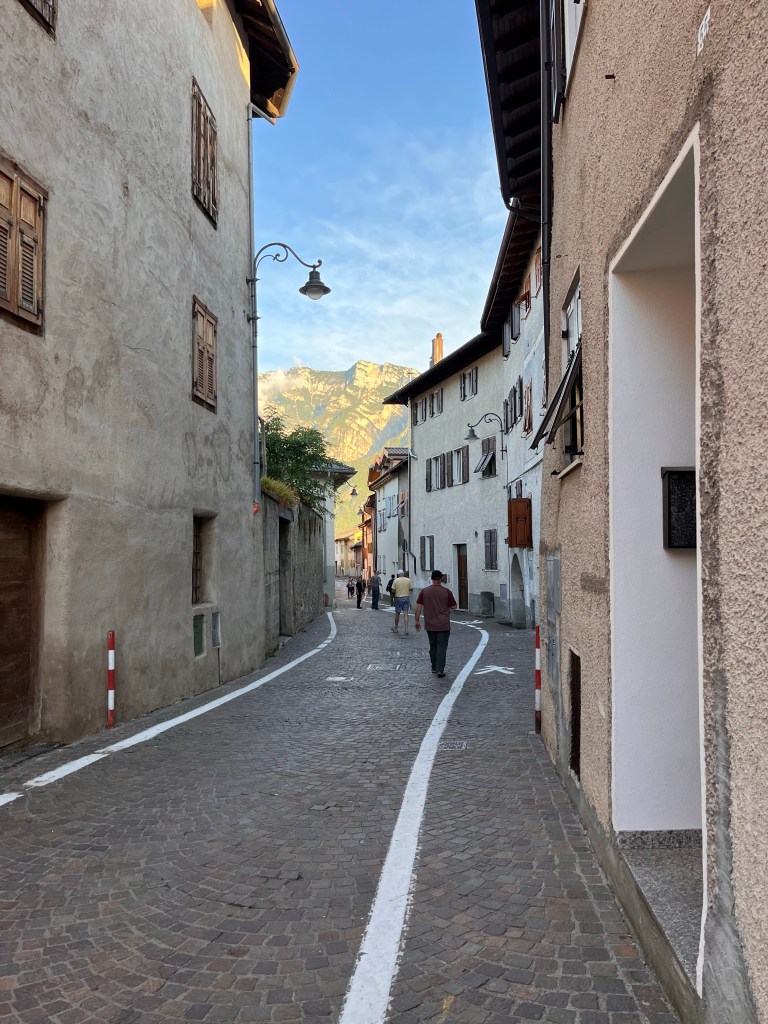
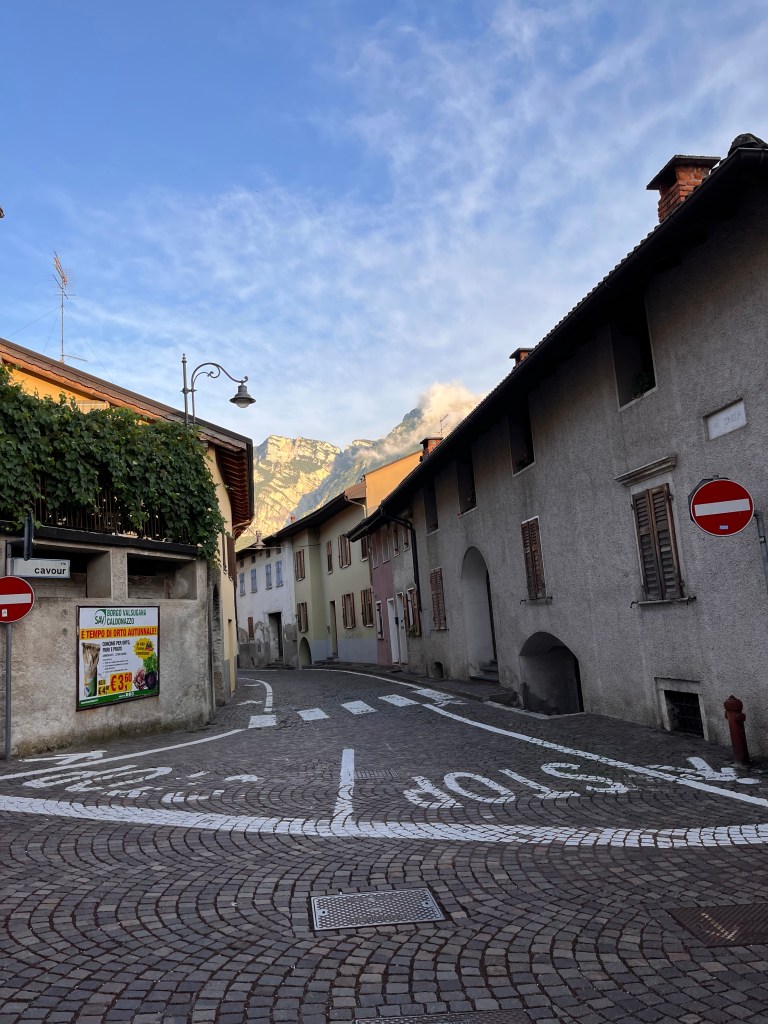
He meandered into some small towns and had a chance to to chat with some local folks. It’s so cool to hear his enthusiasm for these micro meetings. There’s so much good if you look for it.
Tomorrow Hank will continue westward on I70. Interestingly, he will stop my his parents former home in Kirkwood MO just outside of St Louis.
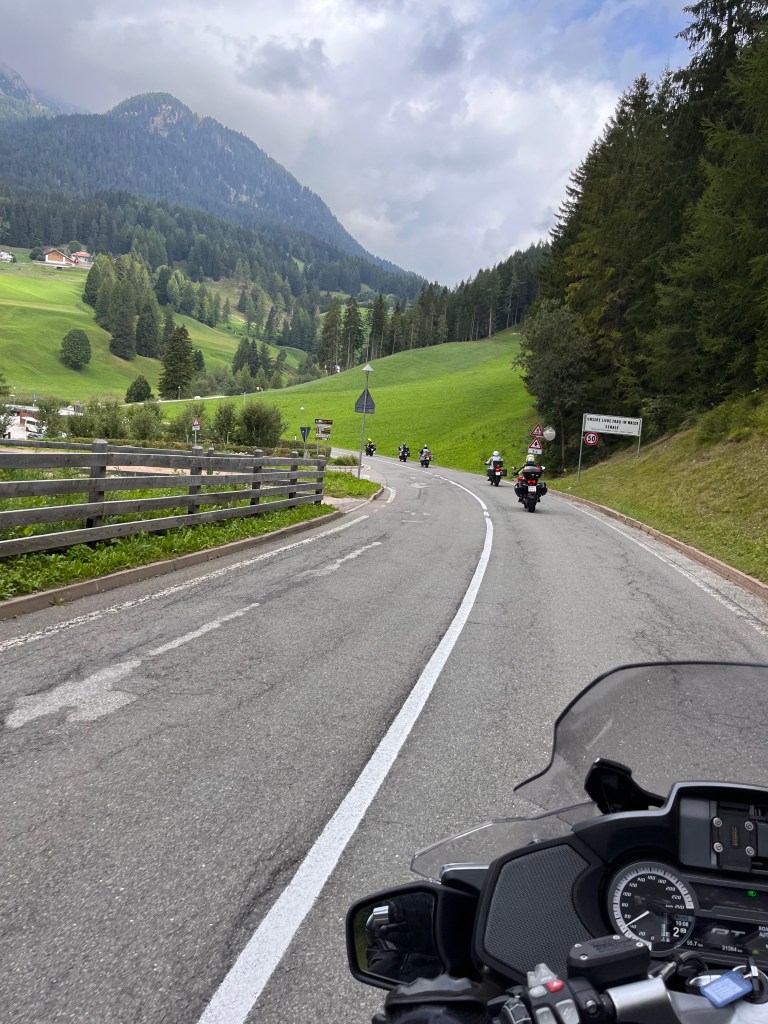
This was the final day of our tour. Connie and I are both excited and delightfully tired from our adventure. While we’ve ridden longer distances in the past in a week’s time, we’ve not had a ride as demanding as this one. The entire route was technically demanding for us, and the narrowness (this is a word, right?) and curves made nearly every mile/kilometer quite intense. This was especially true of the ride through the Dolomites yesterday, and the ride returning today to Mieming.
All told, we covered about 1,000 miles (1,600 kilometers) in six days, with more than 4,500 curves and over 650 switchbacks. (I find it a little easier reading this on the backside of the trip!)
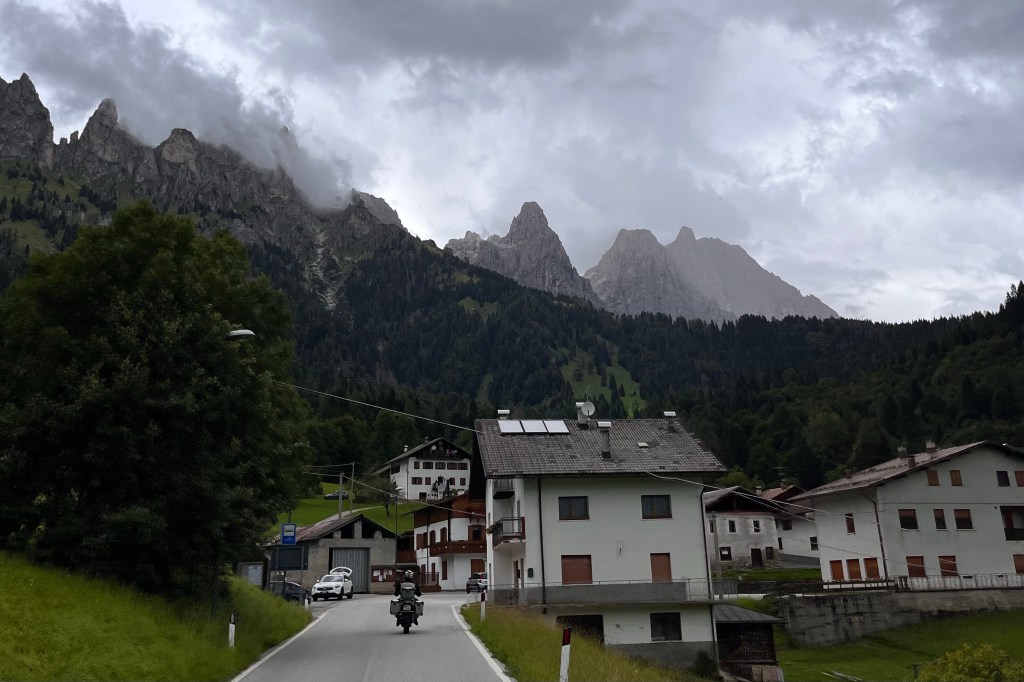
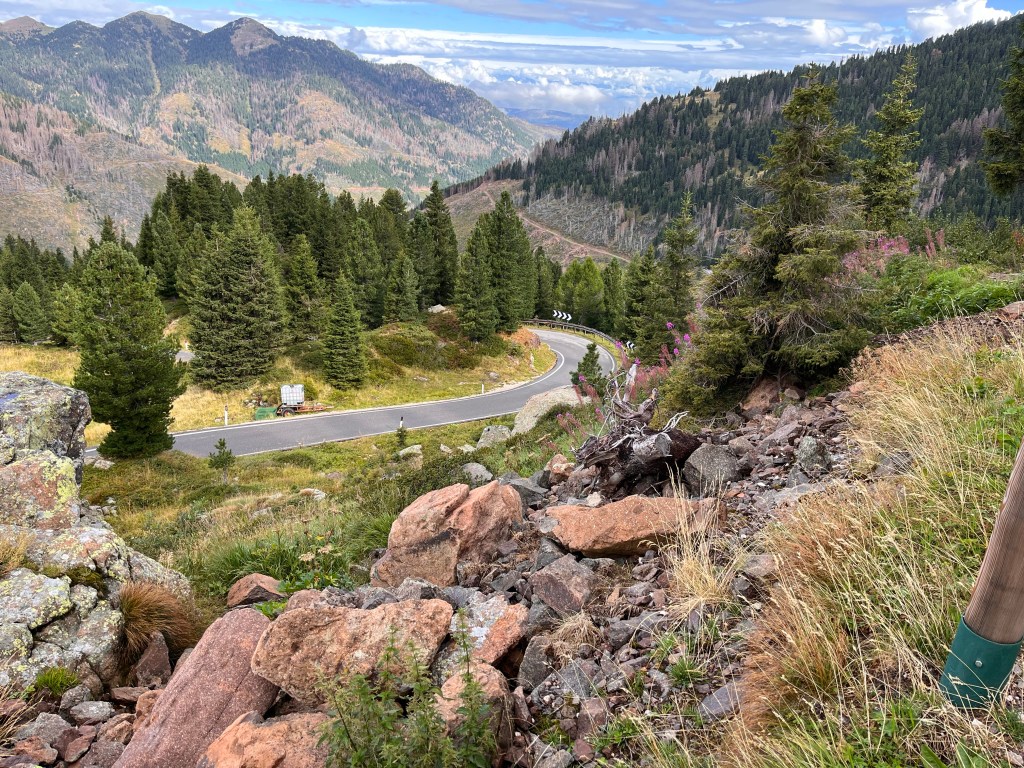
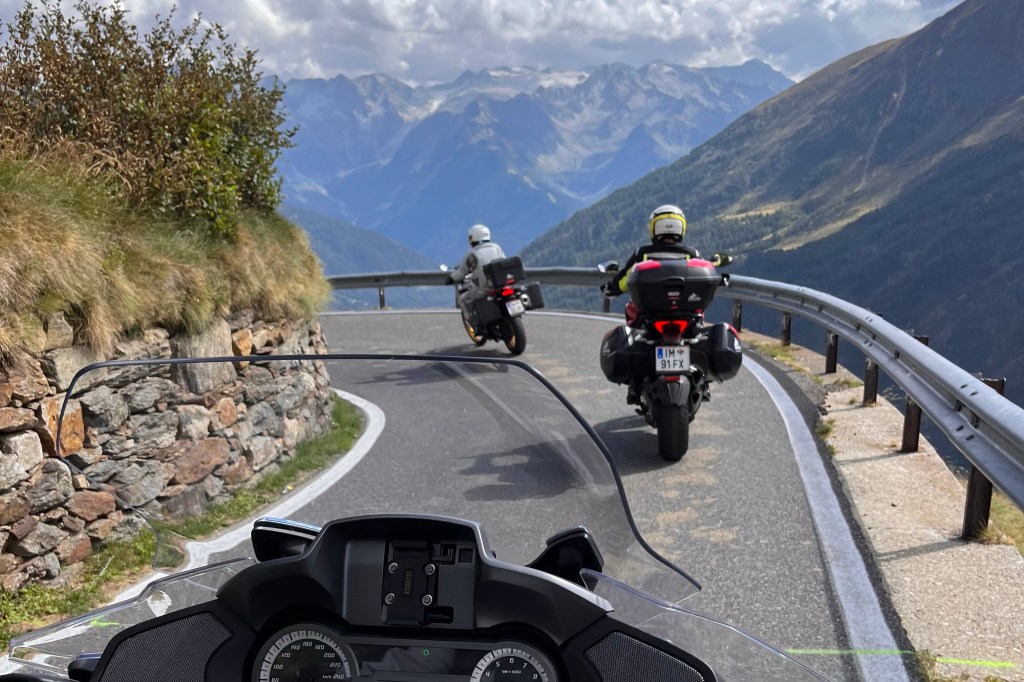
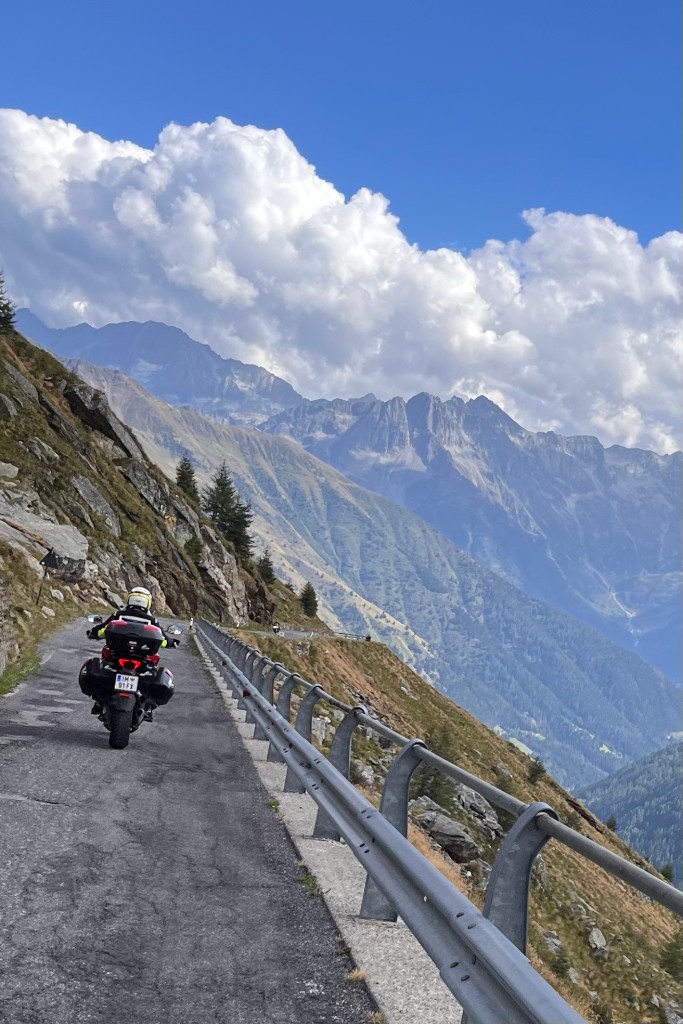
After a few kilometers’ warm up on well-maintained roads, we turned onto the Passo Della Erbe, also known as the Würzjoch (“Würz” means spicy!), a relatively unknown, single-track pass with great views. The road looks intimidating because it’s about the width of many bicycle paths in the US. This is especially true when you meet oncoming traffic in the form of a bicycle, a motorcycle or even a car! It turns out there is sufficient room for multiple vehicles to pass each other safely. We’re just used to (spoiled?) much greater room on most American roads. Whereas we had freaked earlier in the week when confronted with narrow lanes, by today we had gained sufficient experience to ride smoothly and confidently no matter the conditions.
This says a lot about our tour guide, Michael, who taught and coached us every day to ride with improved skill and pleasure. Edelweiss provided us with great machines and a super tour leader. We all feel as though we are much better riders after this experience.
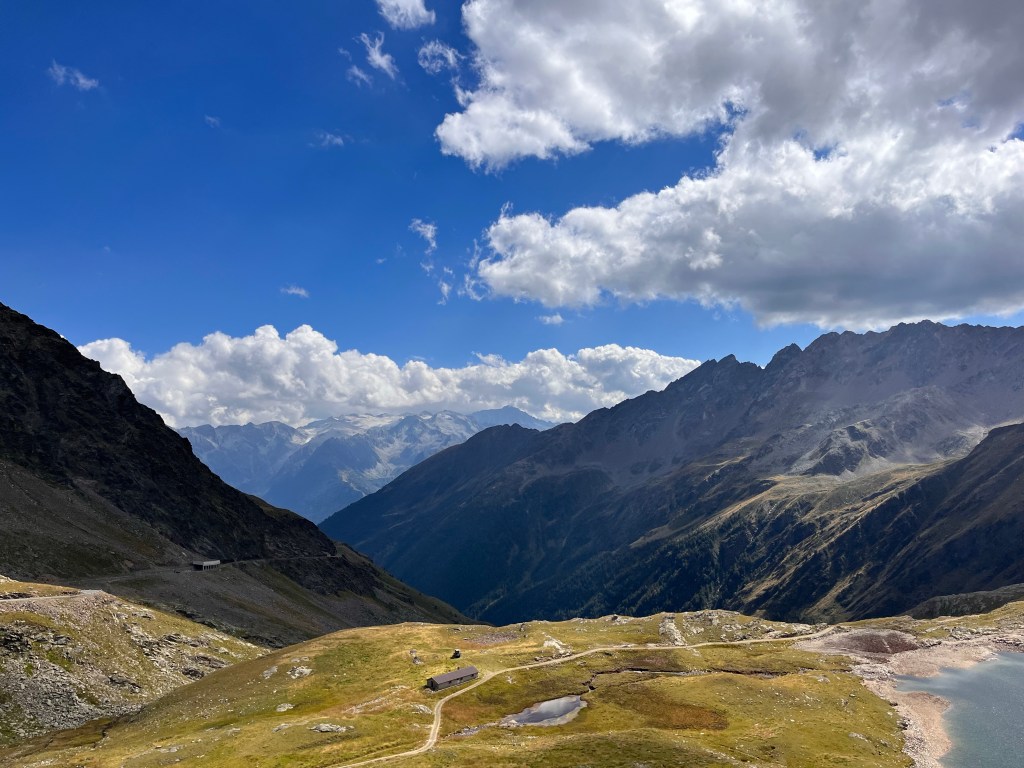
By this time, the Dolomites were behind us and were again in the South Tyrol mountains. We continued our ride to the Passo di Monte Giovo (Jaufenpass). The 31 km long Jaufenpass is a very smooth ride and offers magnificent views of the South Tyrolean mountains. The pass summit at 2,094 meters is crowned by a tiny wooden hut called “Edelweisshütte”. The small parking lot in front was crowded with motorcycles. It was cold and windy with the threat of rain. We were grateful for some warmth, all ate a good lunch and rested a bit. Connie and I had a goulash soup that was hot and spicy and good.
We mounted back up and rode over the Jaufenpass to the Timmelsjoch, home to the world’s highest motorcycle museum and a spectacular ride. Connie and I had ventured up here on our own before the tour began, so we won’t repeat the description here.
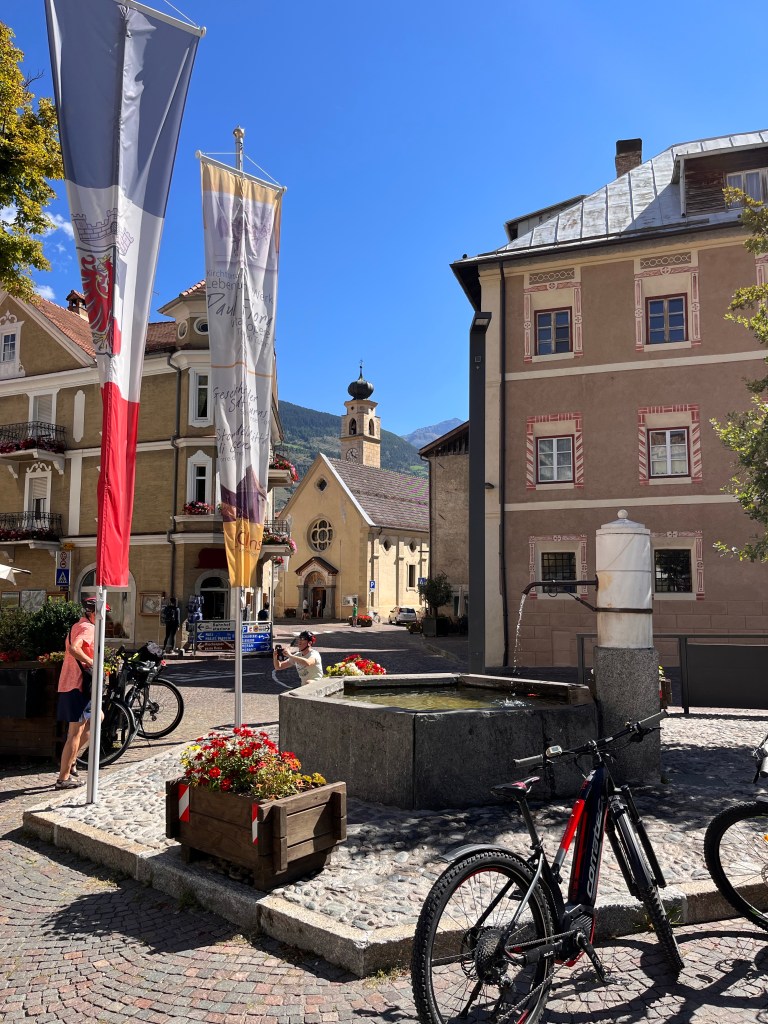
After a coffee and some cake, we head downhill towards Mieming and our “Farewell Dinner” where we shared our stories and thanked our terrific host.
We made new friends with riders from Toronto, Seattle, Denver, and a little town just north of Nürenburg, Germany. Connie and I were the only couple riding. As is normal for us, we rode a little more cautiously than the singles, but shared so much fun learning the skills needed for successful Alpine riding.
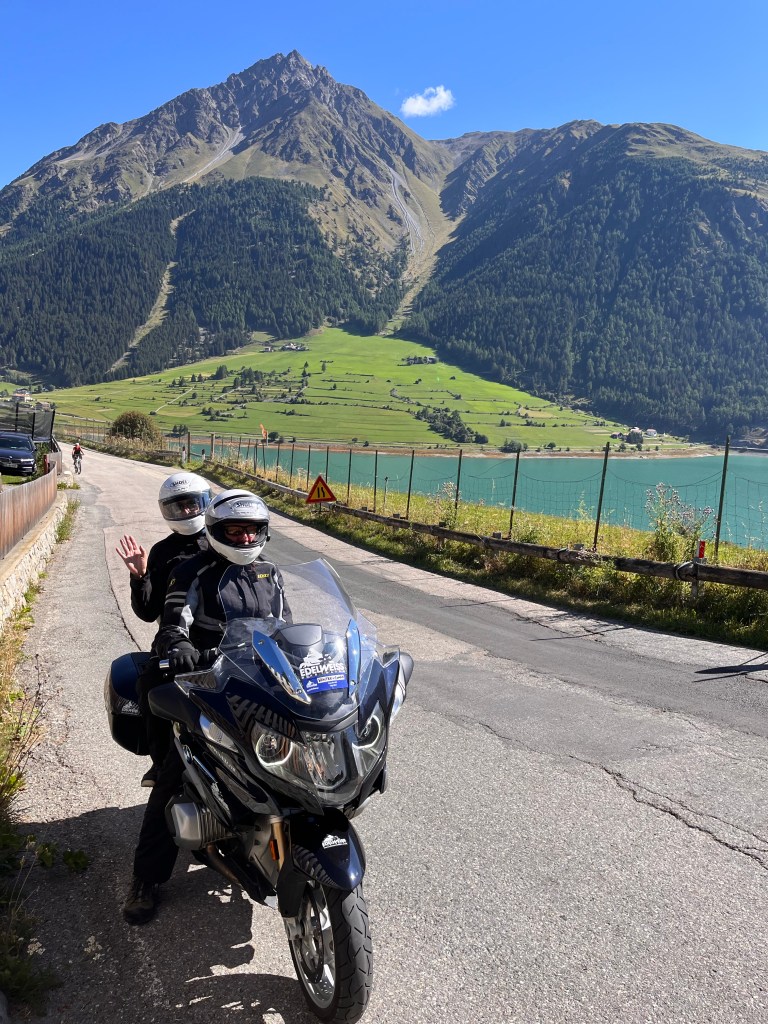
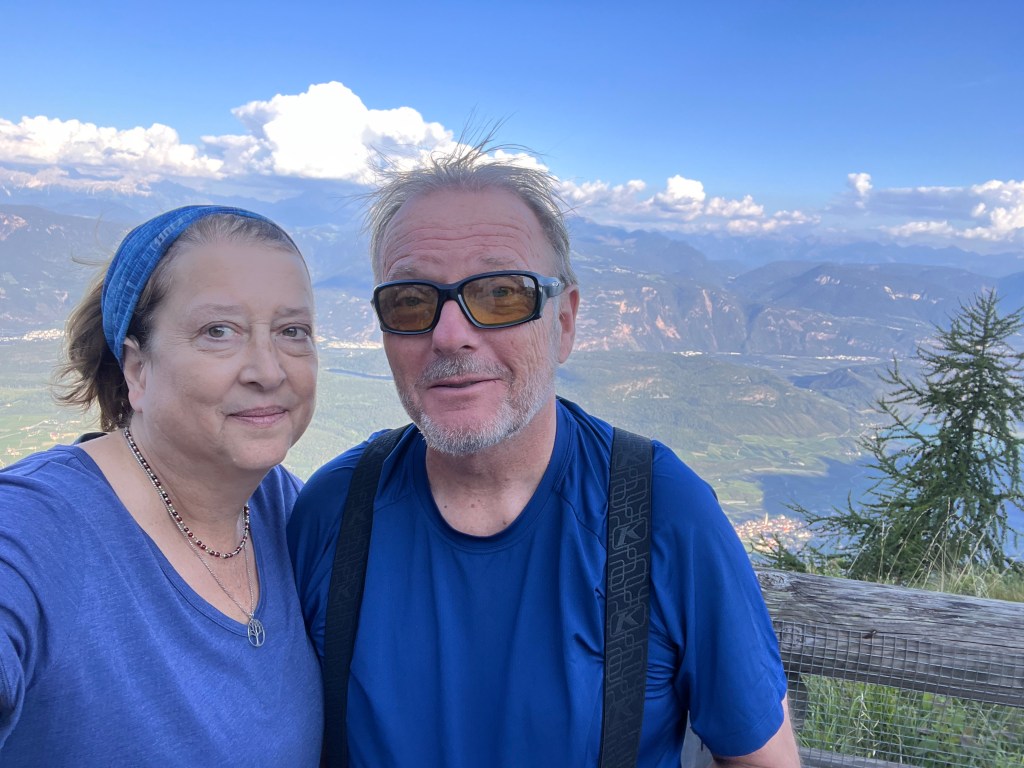
Riding, especially high intensity biking, demands that you be “in the moment” every moment. That makes it tough sometimes to recall the details that enrich the experience. Connie did her usual amazing job capturing images and video clips of our tour and she shared her work generously with everyone. You’ve seen some of the fruits of her labor here. Everyone wondered how she could take such great shots while hanging on in those tight turns. I don’t know myself, except that she’s an exceptional 2-up rider who knows what she’s doing. I’m so glad we do this together.
Sunday is a pack-it-all-up and hump it to the train to Munich. Then it’s pack-it-all up-neat so our bags can be checked in, and then hump them to the airport for our return flight. We should get in late Monday night. Being home and in our own beds sounds pretty good right now.
We hope you’ve enjoyed our blog. We’re tickled you spent some time with us and maybe found some enjoyment, too. Thanks for checking in.
And now, good night.
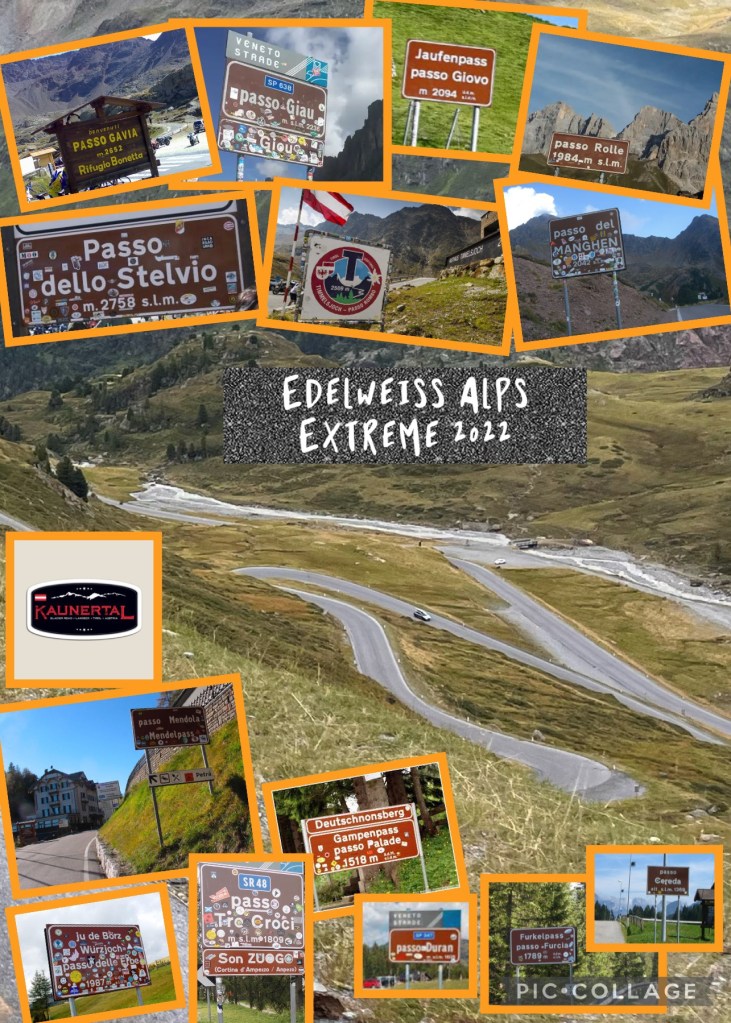
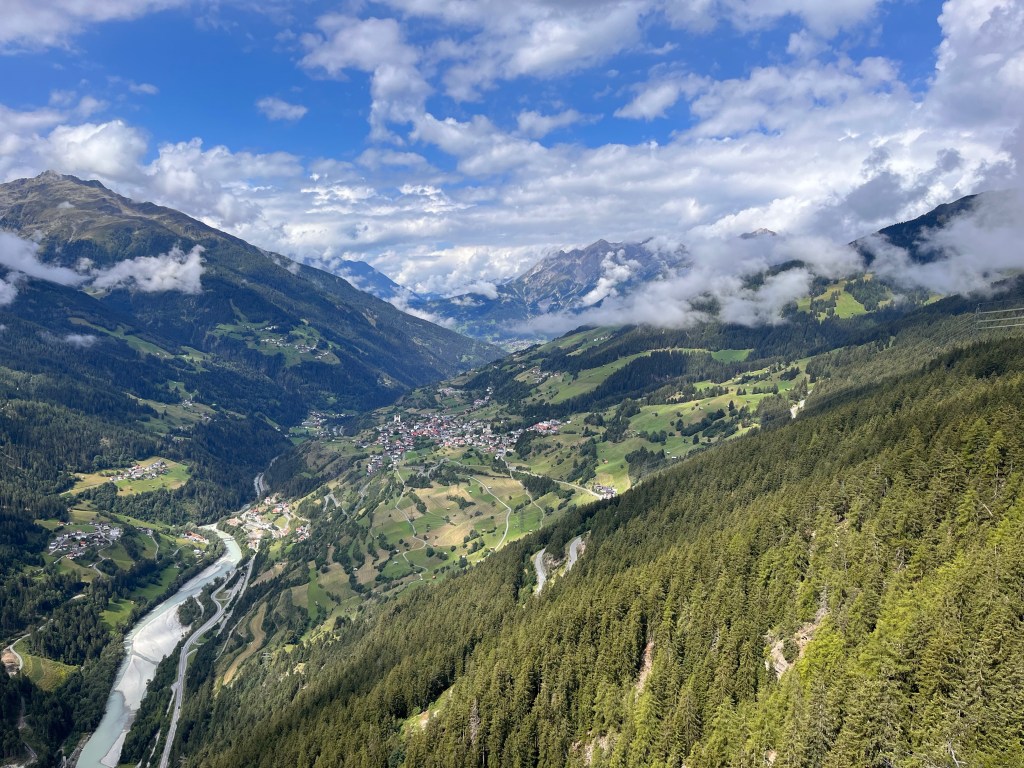
This video is really beautiful and shows some of the alpine scenery we’ve enjoyed. The valley really is a long way down. A quickly made collage of the passes we rode.
Tour Day 5 – Levico Terme to Rasen Antholz via the Italian Dolomites.
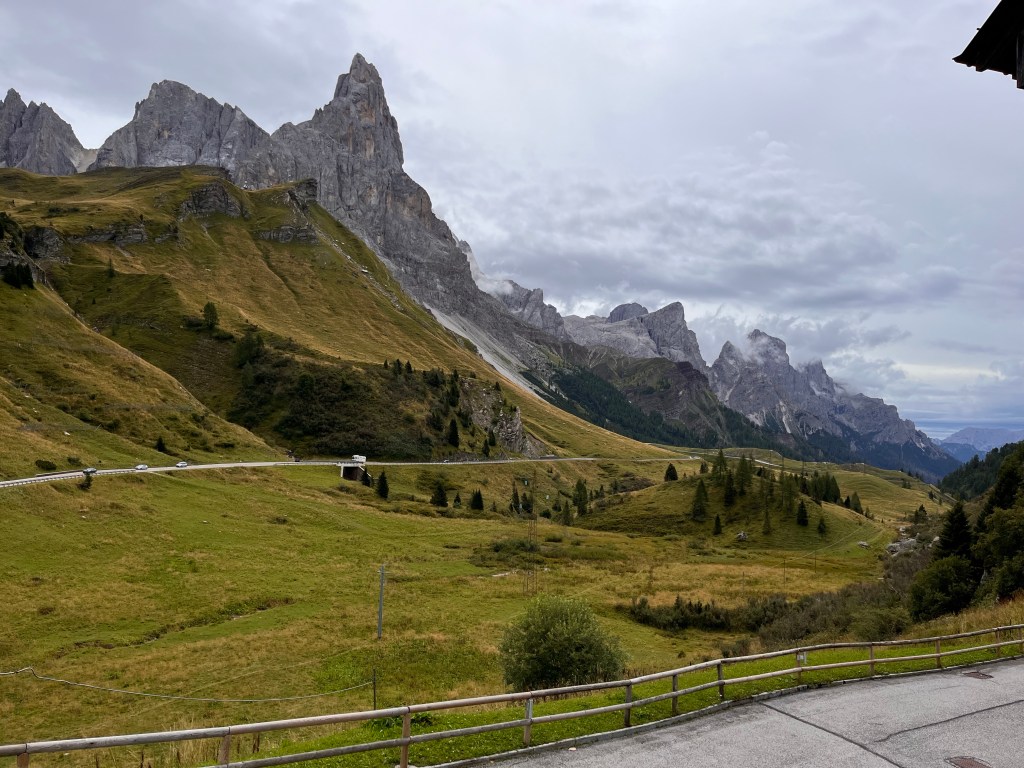
Today was by far the longest and most beautiful day so far. We left our Hotel in Levico Terme and rode over 270 kilometers (nearly 170 miles) to Oberrasen, Italy through the heart of the Dolomites. We cleared seven passes with a combined more than 150 hairpin turns and over 1,000 curves. (Yes, someone actually counted them!). After the tough and tight switchbacks of Passo del Stelvio and others early on, these turns were challenging but so much fun!
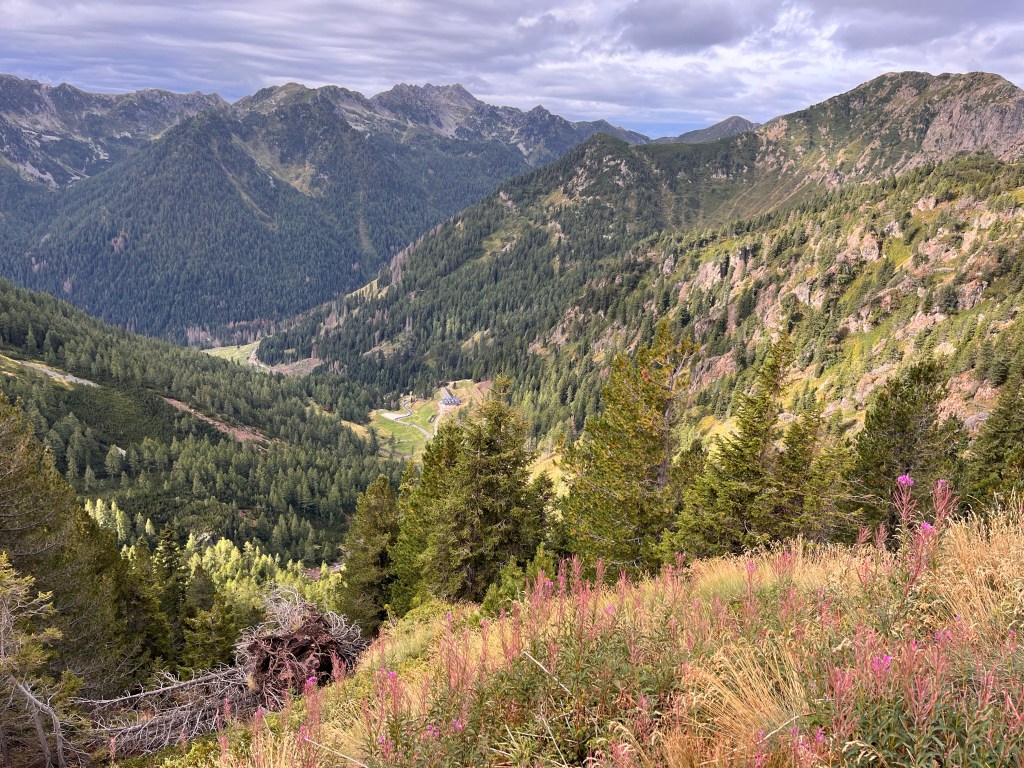
The best passes were Passo Manghen, Passo Duran, Passo Cereda, and Passo di Giau. And unlike the famous Stelvio Pass, we met very little traffic through these passes. As a result, had a blast without feeling rushed or squeezed by buses and trucks. And our stops along the way gave us a chance to take in the Dolomites up close.
The name “Dolomites” is derived from the name of the French geologist, Déodat de Dolomieu, who discovered that the limestone in this area is chemically different from the mountains to the north. This means that this special sedimentary rock that has been thrust violently upwards forms incredibly rough and beautiful formations. Connie and I were reminded of the Sawtooth Mountain Range in Idaho which are high, very steep, and look jagged and dangerous.
Historically, the Dolomites are also very interesting. The region belonged to the Austrian Monarchy at the outbreak of World War I. The front ran right through the mountains. Austria was one of the losers of the war, and at the peace treaty of St Germain, Austria agreed to hand southern Tyrol over to Italy. Many of the road signs and villages still have both German and Italian names along what was the former Austrian region in southern Tirol.
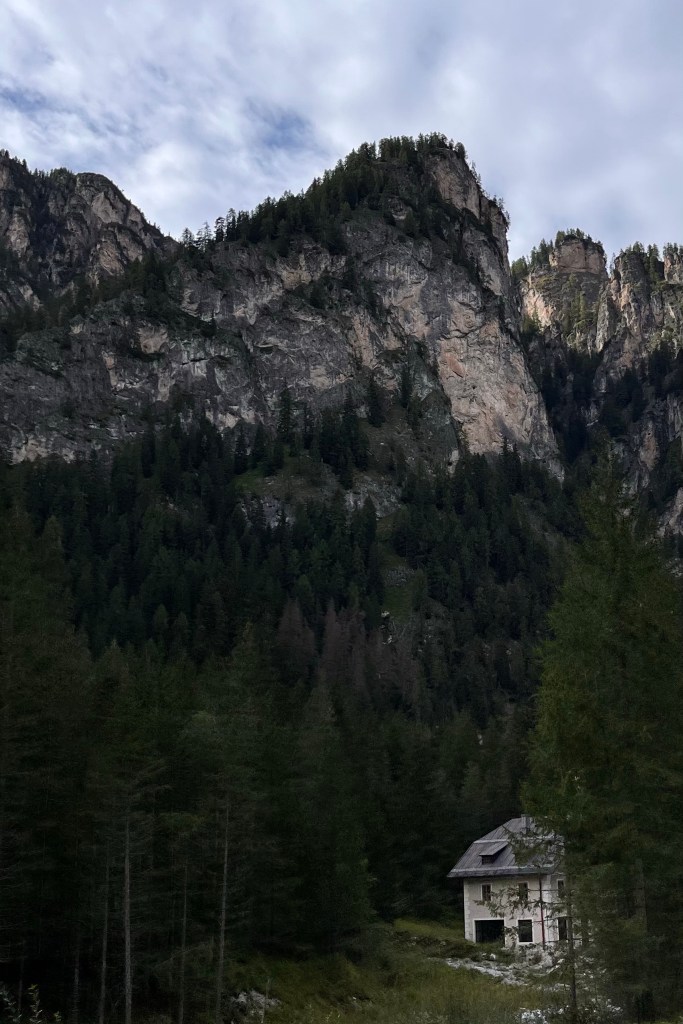
The Dolomites at Passo Rollo
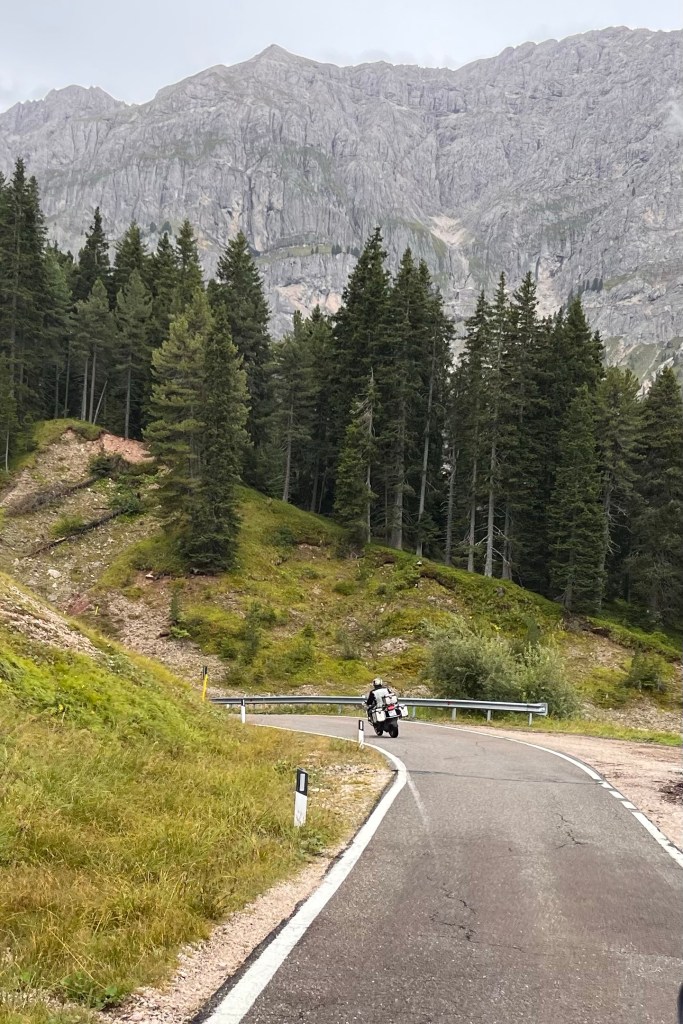
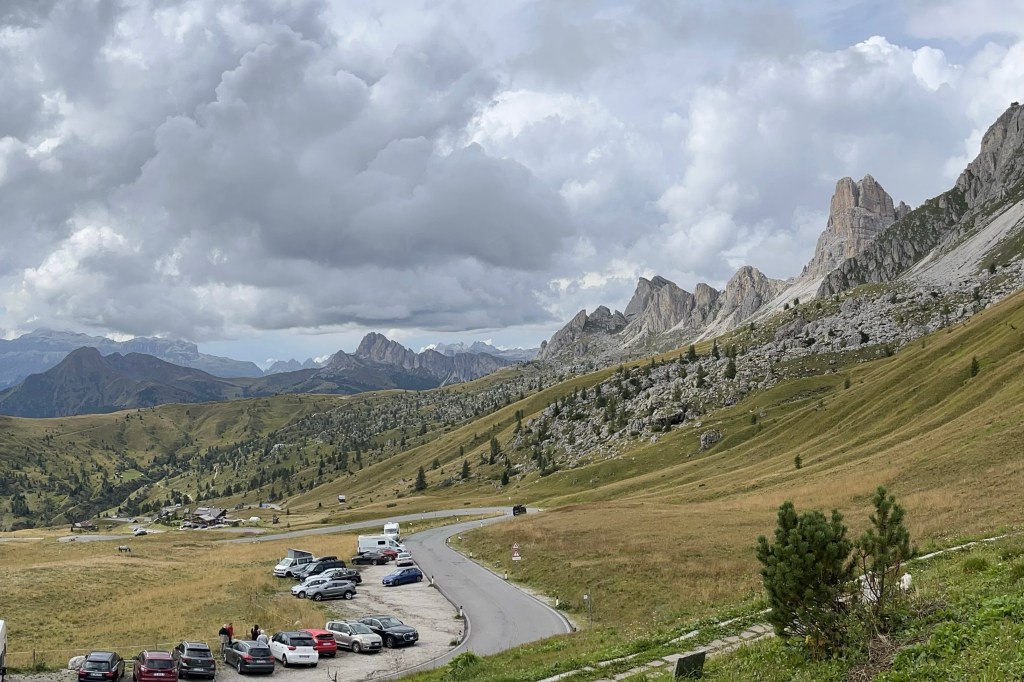
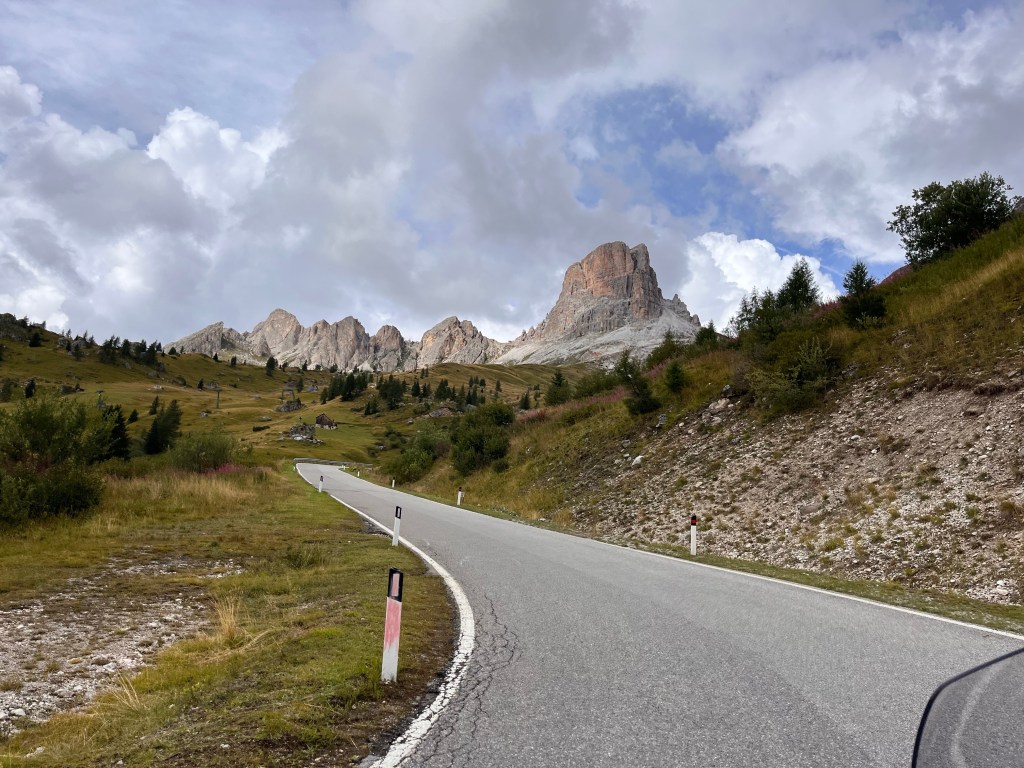
Riding through the Dolomite mountains we honestly felt the roads were built for motorcycles. And Passo Di Giau is the best. There are 55 perfectly constructed hairpin turns that have a rhythm to them. Our traverse felt almost like a dance, if that makes sense. And we had the pleasure of some mind blowing views.
The Dolomites at Passo Di Giau The Dolomites at Passo Di Gaiu
Interestingly, there are a ton of speed traps along the way. (The only stretch of the tour where this was true.) There were big blue or orange barrels holding police cameras that will take a shot of your vehicle if you’re moving too smartly. It seems there is a history of local riders using the road to Passo Di Giau as a racecourse. The cameras have put a damper on that because traffic fines here are really steep. So we minded the speed traps and saved ourselves some cash.
It has been a long and fun day. Now to bed. Tomorrow is our last day. <sigh!>
Good bye for now, Dolomites! Thank you for sharing your majesty
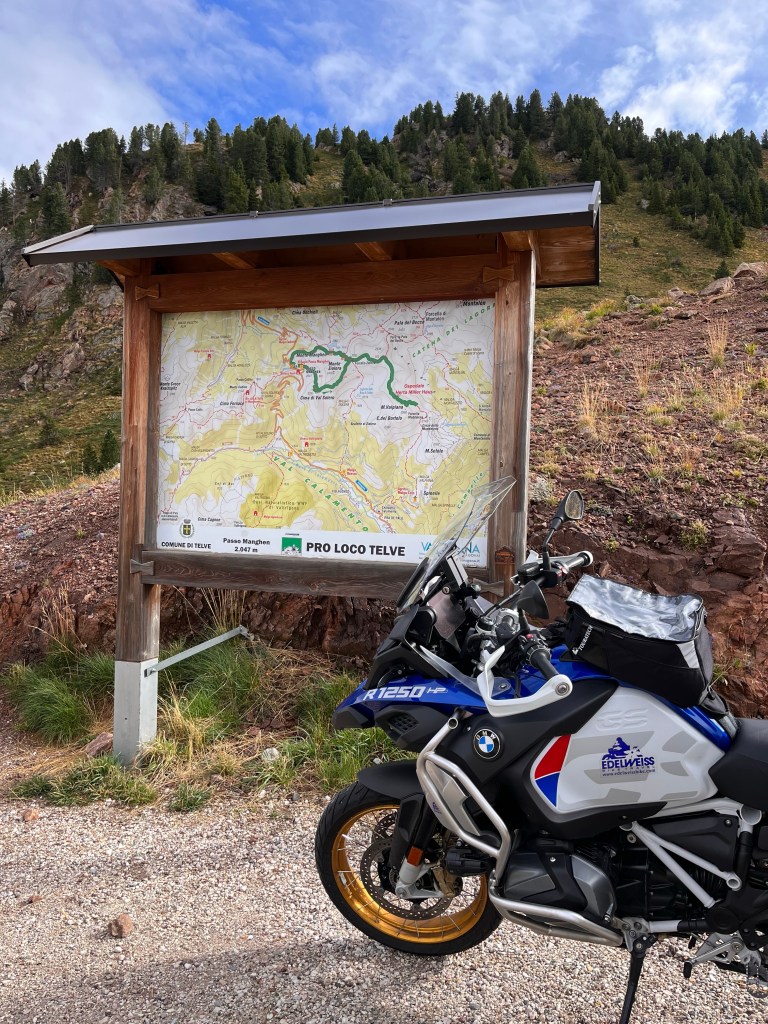
This morning we left Levico Terme and rode to Passo Mangen
This is an arial view of our hotel from Tuesday night. We rode a lot of hairpins and tiny roads to get there.
Tour Days 3 and 4 — Penegal , Italy to Levico Terme, Italy
As promised, here’s our entry for yesterday. We left the Hotel Monte Penegal, situated on a sheer cliff about 5,700 feet above the Adlige Valley, heading toward Levico Terme, a small resort town about 20 km from Trento that sits well above a beautiful lake, Lago di Levico. Though the distance isn’t much in a straight line, Michael, our guide, led us on a lot of fun roads to get to our destination.
Our first pass was Passo Della Mendoza (Mendel Pass), which opens a path between two Italian provinces, South Tyrol and Trentino. This pass has long formed the border between the German-speaking and Italian-speaking regions of the Tyrol region. Bolzano is a town founded by the Romans over 2100 years ago and has been a trading center for most of that time because it’s almost dead center between Venice and Augsburg, Germany. Remember, control of the roads was essential to regulating, enhancing, and protecting trade. That’s why so many Alpine roads have such ancient origins and have been continuously improved over millennia . Our rides take advantage of these centuries’ old routes for our riding pleasure.
We continued over Passo della Palade (1518 meters or about 5,000 feet) and over Monte Bondone. The ride down Monte Bondone involved 40 switchbacks covering 1,450 meters (4,750 feet) in quick progression. The road was very good and the hairpins were not too tight. We always try to ride smoothly so our usual style was conducive to the road and we had much, much fun!
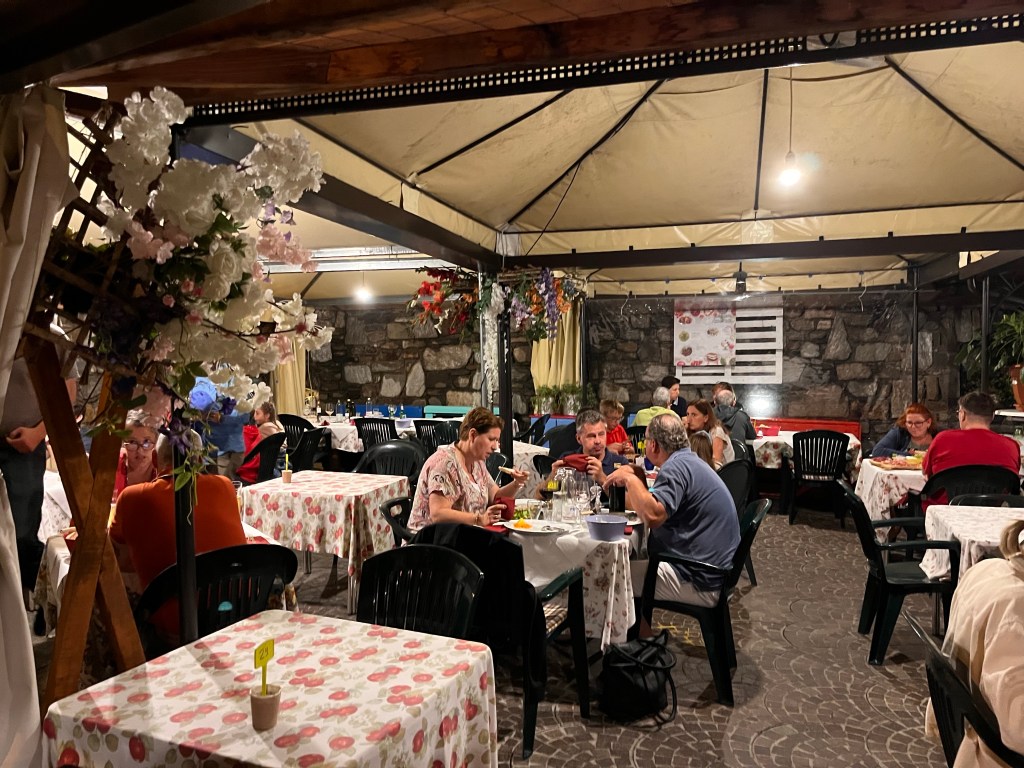
We landed at a lovely hotel in Levico Terme and had some fabulous pizza. But the day was tiring so Connie and I invited ourselves to crash early to bed.
Actually, “early” is a relative term. Our suppers all begin around 7:30 and can last a couple of hours. Part of that is the culture and partly to share time with our fellow riders. When we get up from the table after 9:30, we’re just about done. Very different from our routine at home.
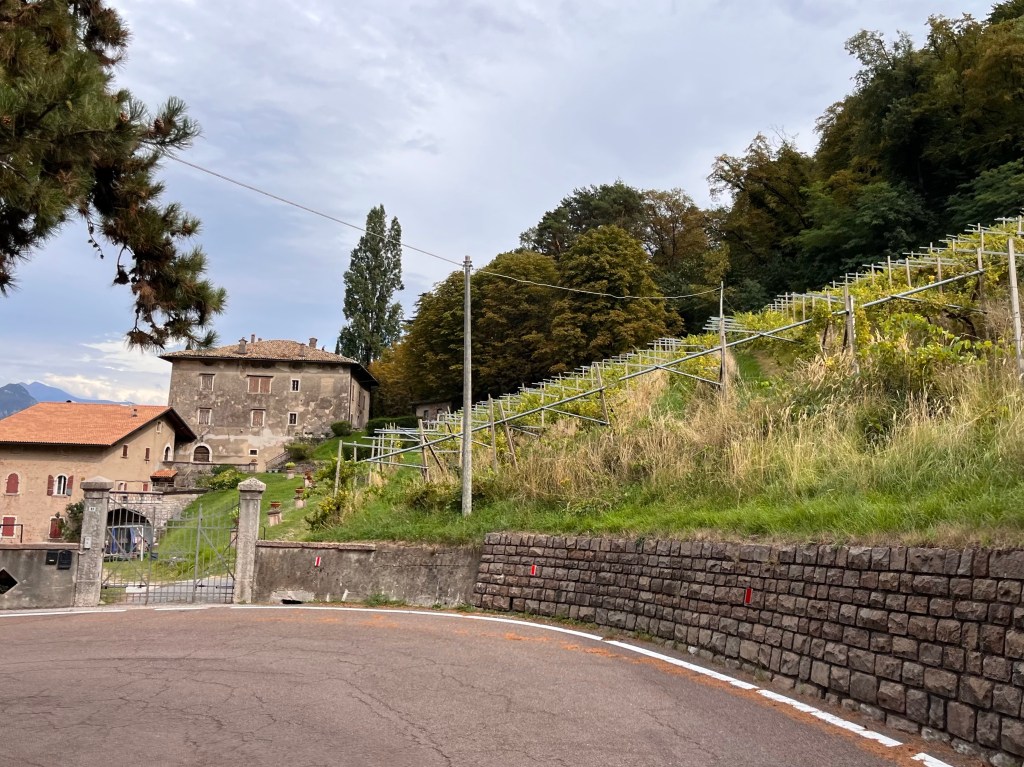
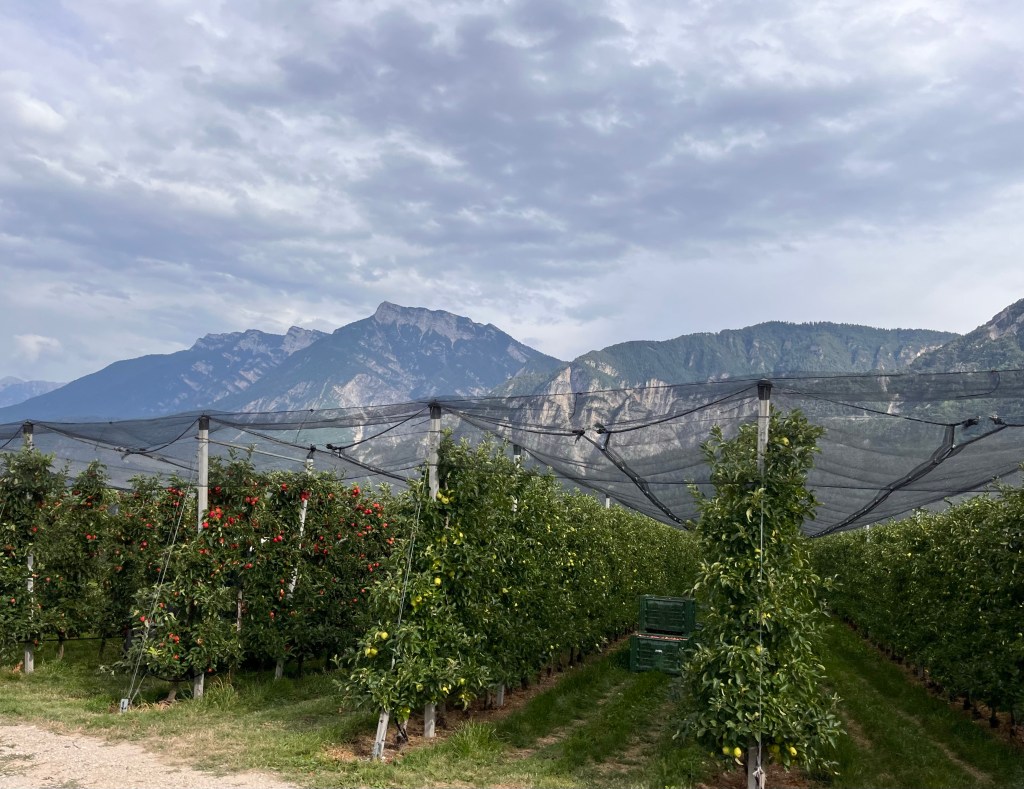
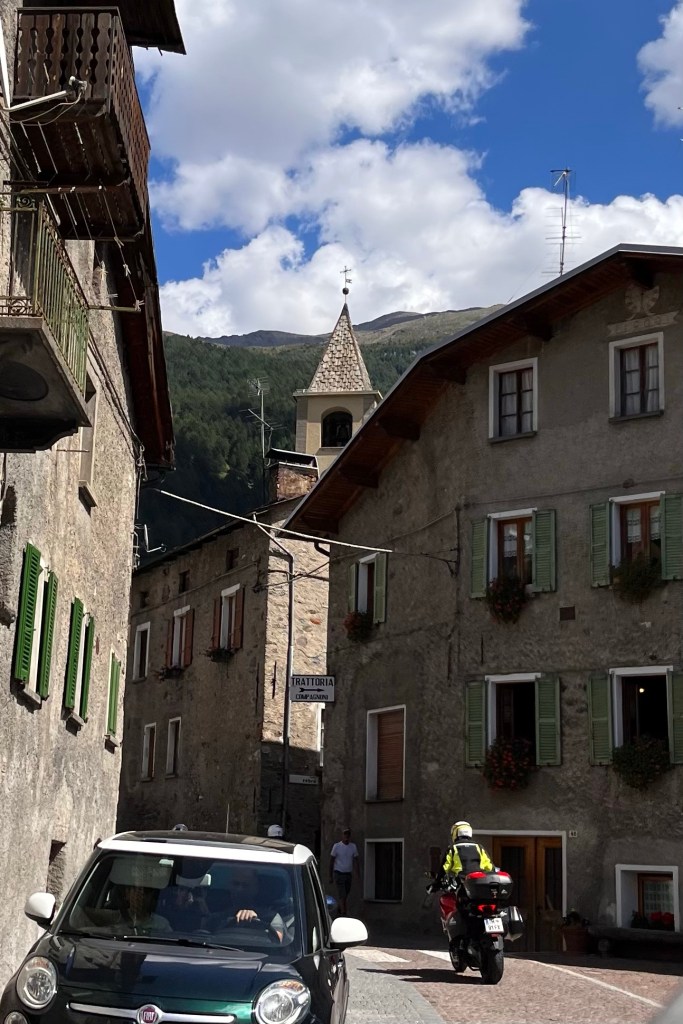
The morning briefingHairpins leaving Penegal – see how they stack up?!This is a road. With a bus coming upon a bike. This is normal here. 😳SighThe first bike is our tour guide, Michael. So many vineyards. So many mountains. Fun!The beginning view of the DolomitesWe’re bike #3 A fellow rider shared this with usRiding through apple orchards
A beautiful bounty of great riding and scenery. Sorry to say we are not writing a post tonight – we are just worn out! You have our promise of a full accounting tomorrow when we have more time. Ciao!
Prutz Austria to Monte Penegal, Italy via Stelvio and Gavia Passes
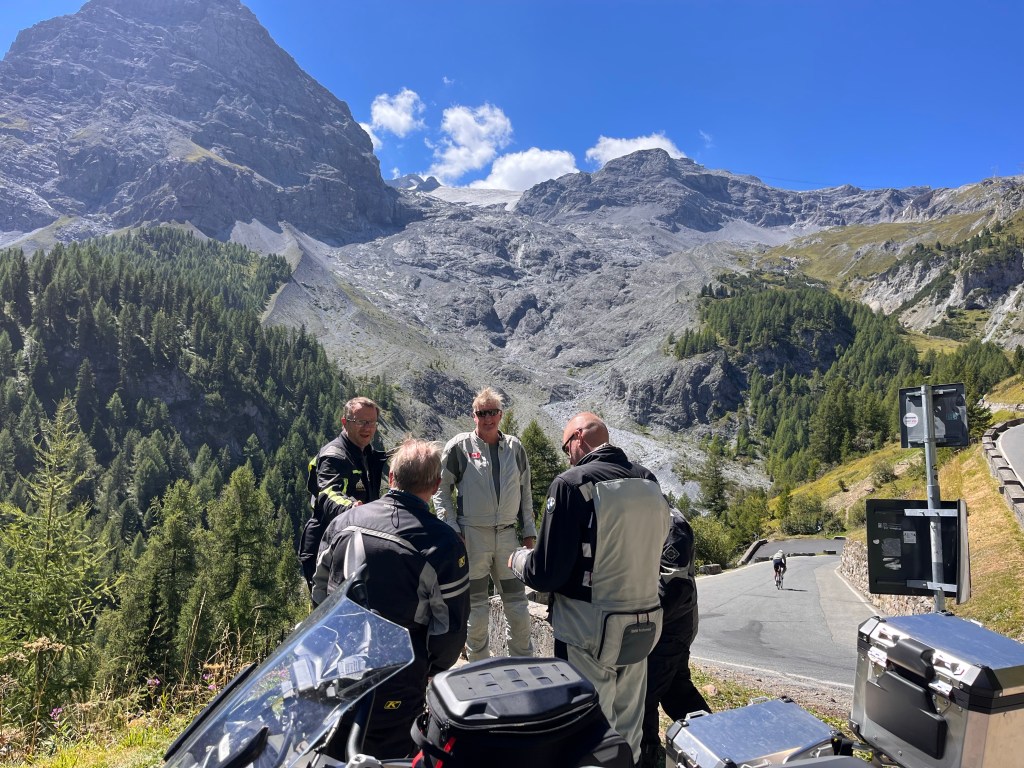
This was the most exciting day of the tour so far. We rode through five passes in all, but we’ll focus on Passo dello Stelvio, which crests at a little over 9,000 feet.
Planned in 1818, this pass road was built in 5 years (1820-1825) by about 2,000 workers. Because horse-drawn vehicles were state of the art, the gradient was limited to a maximum of 11%, which is still pretty steep. (We’ve ridden on hill grades as high as 16%.) The road to Stelvio Pass was was built on an ancient trade route dating back to Roman times to move goods between Switzerland and the Duchy of Milan, Italy.
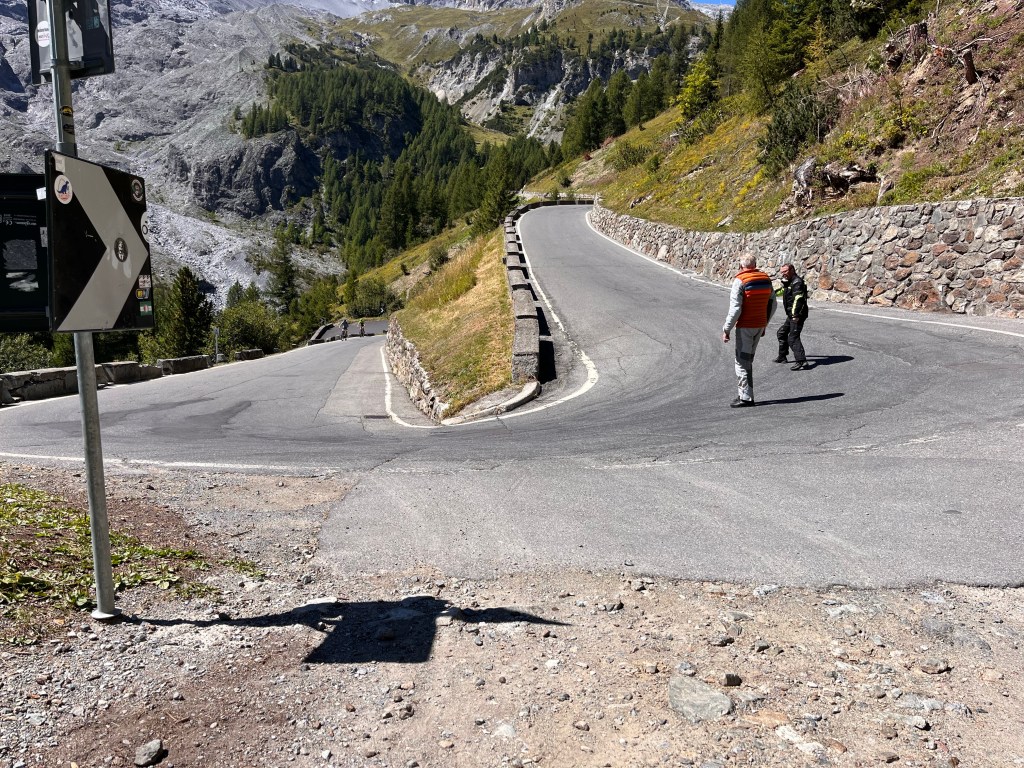
Stelvio Pass is the highest pass in Italy and the second-highest paved pass of the Alps. With its 48 switchbacks rising up the northern approach, it is both a famous tourist attraction in its own right, plus a first-class challenge for bicycle and motorcycle riders from across the world. The switchbacks are very tight and very challenging.
When we made it to the top a little dazed and breathless, our fabulous tour leader, Michael, brought us to a small stand that served fabulous brats on homemade Italian bread. We felt we were eating like conquering champions. Well sort of. We were exhilarated and a bit wrung out actually, and needed a chance to refuel and reenergize. As a note: Ever since I first saw pictures of the pass some years ago, it’s been one of my must do’s. Connie and I both felt the thrill and she got some terrific shots which she shared with our fellow riders on the Edelweiss tour. Everyone is glad because most of us were otherwise much too busy to even think about photos.
After Stelvio, we climbed the Gavia Pass (8600 Ft) another high Italian alpine pass. Gavia is famous for the Giro d’Italia road bicycle race, and is notable for both stunning scenery and very narrow, rough roads. It’s usually best to enjoy these one at a time.
Andre, our new friend from Colorado, noted that Colorado bike paths are usually wider than these roads. A bit of fun with motorcycles, bicycles, cars and (yes) trucks going both ways. Amazing and fun.
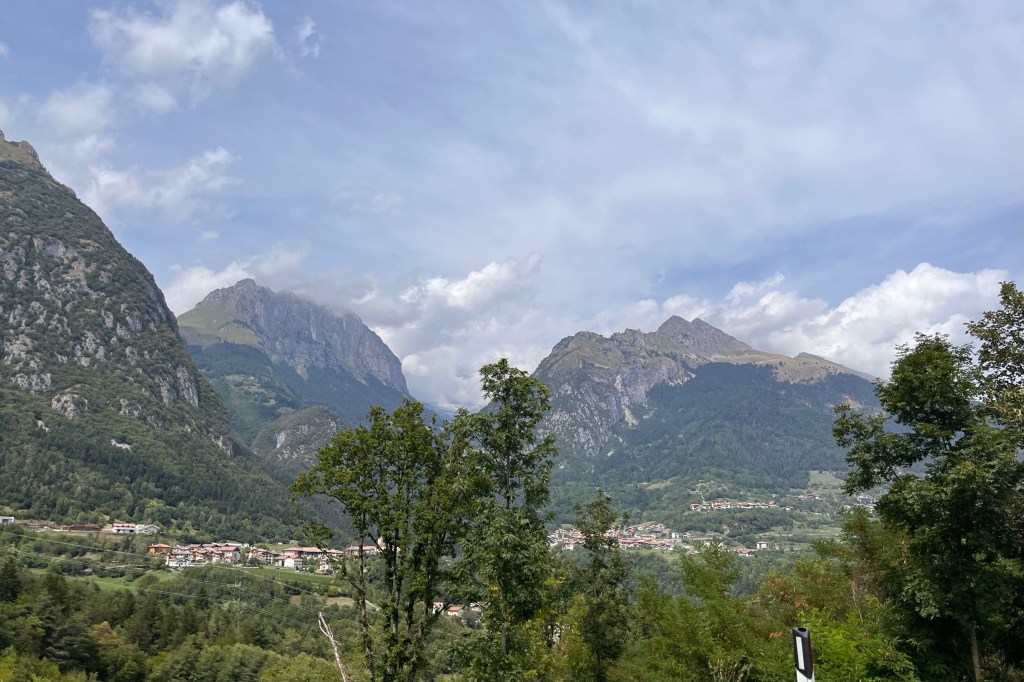
We ended the day climbing yet another pass to the summit of Monte Penegal where we’re spending the night. The hotel offers a panorama of mountain peaks in Austria and Italy, especially the Dolomites which we’ll ride to soon.
There’s so much more to tell, but we’re a bit wrung out. (Okay, I am.) Hope you enjoy the pics and thanks for coming along with us for this while. Good night!
PS. You can also follow along on our trip on the official Edelweiss Alps Extreme blog.
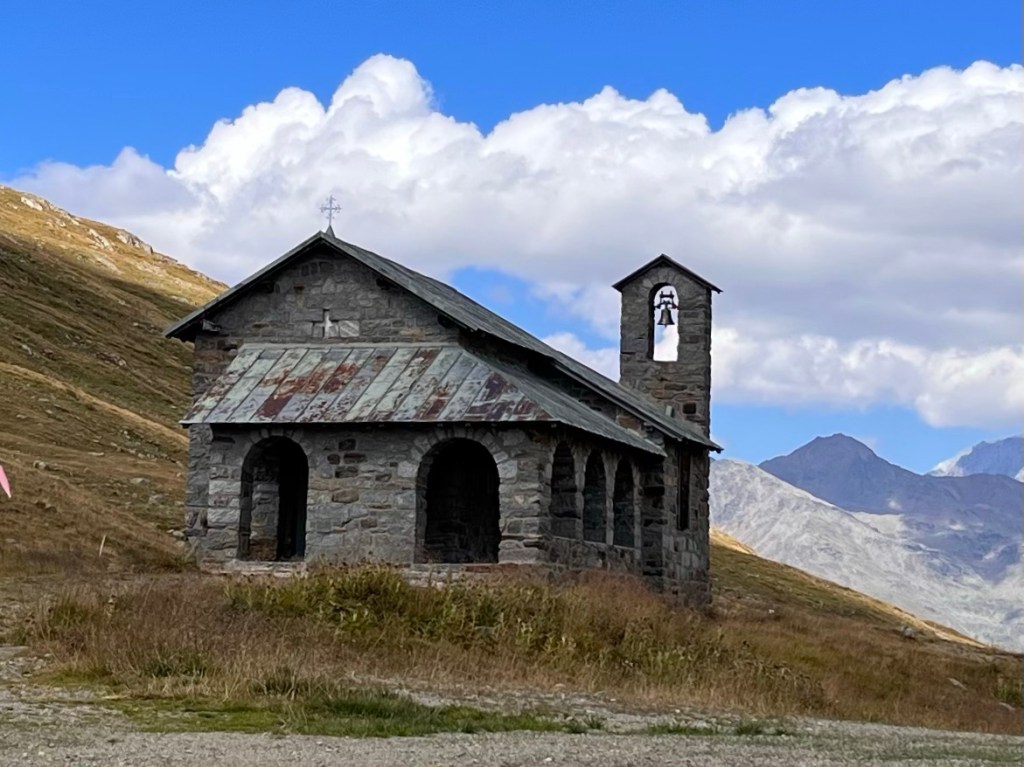
Stelvio PassThe riders huddled for some tips on navigating switchbacksCelebrating the downside of Stelvio PassA chapel at the top of Gavia PassBeautiful views on the Gavia PassThis path is a road!We stopped at an intact medieval town for coffeeThe view of Bolzano from our hotelThe end of long day on the road. We. Are. Done.
Untermieming, AT to Prutz, AT via the Kaunteral Glacier Road
We set out at 8:30 am in the rain this morning. Yeah, it happens. It’s part of the experience and we aren’t likely to melt. Besides, this area really needs the rain. We had a fun ride on the Kütai road (which Connie and I did on our own the other day), then stopped for coffee at a nice Gasthaus before continuing on to the Kaunertal Glacier. We were fortunate the weather changed.
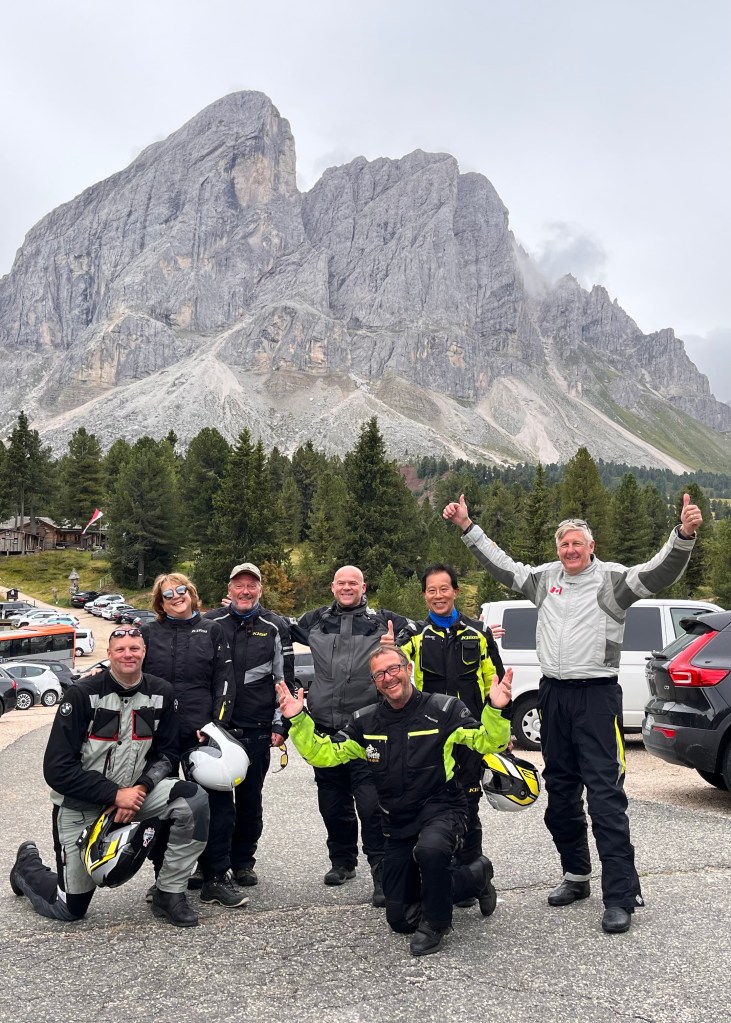
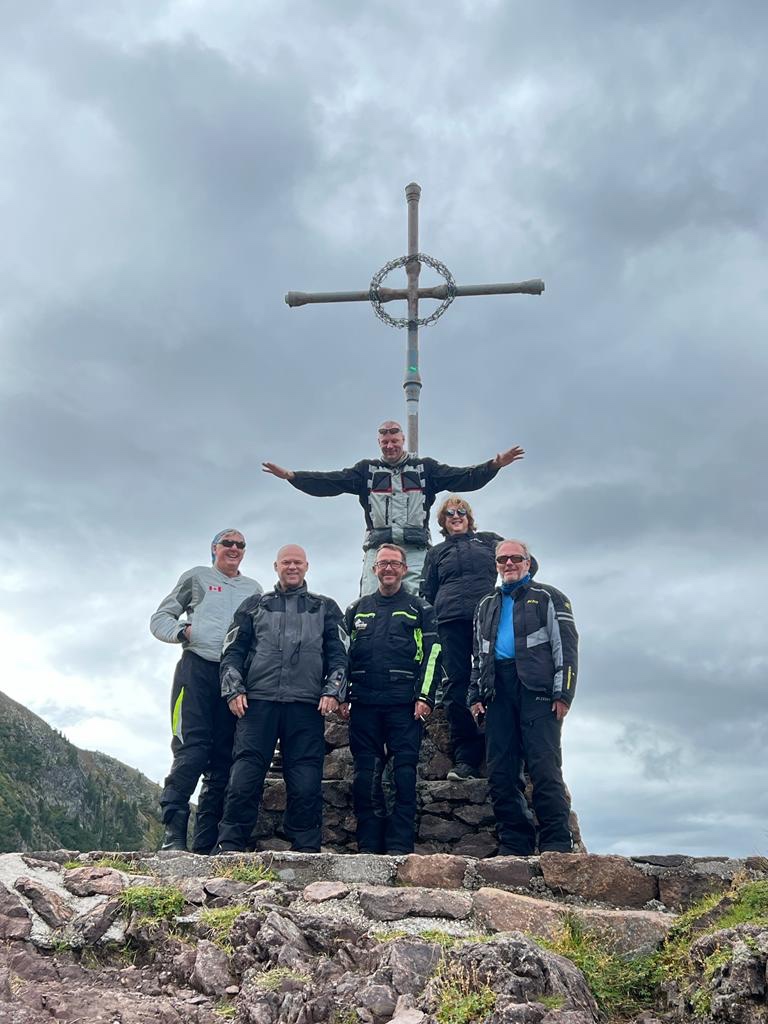
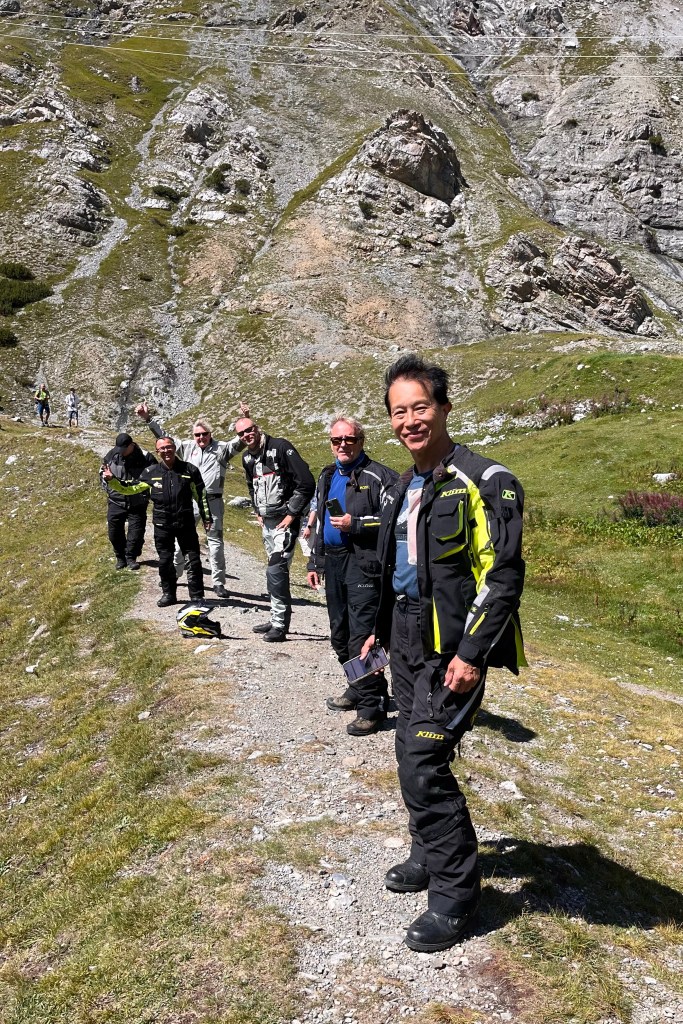
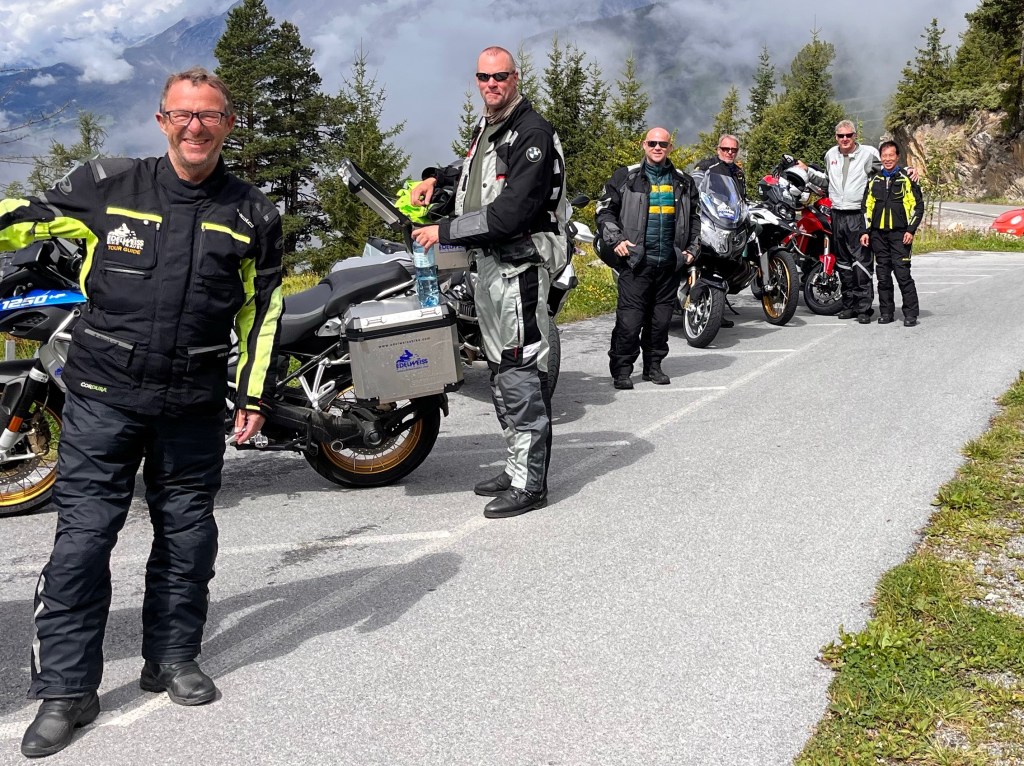
Our “crew” for the tour: Michael, our guide,; Andre, from Colorado; Eyal, from Seattle; your charming author; then Phillip and Gary, from Toronto. Connie took the shot.
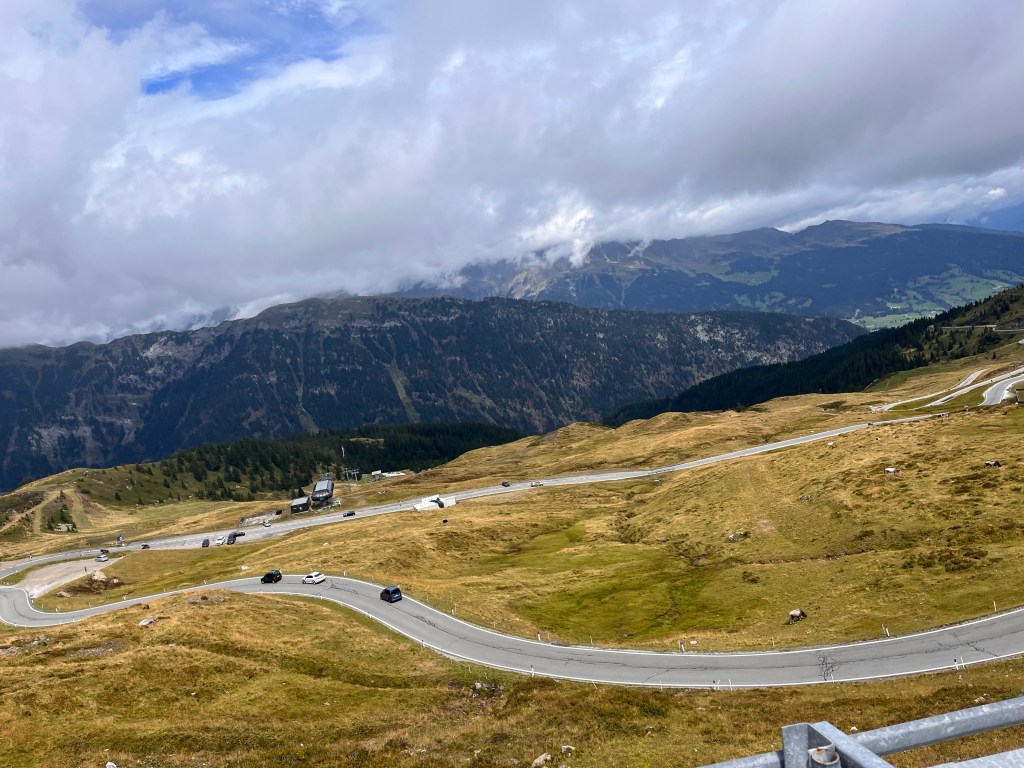
Enroute to the glacier we stopped at a scenic overlook. Wow!
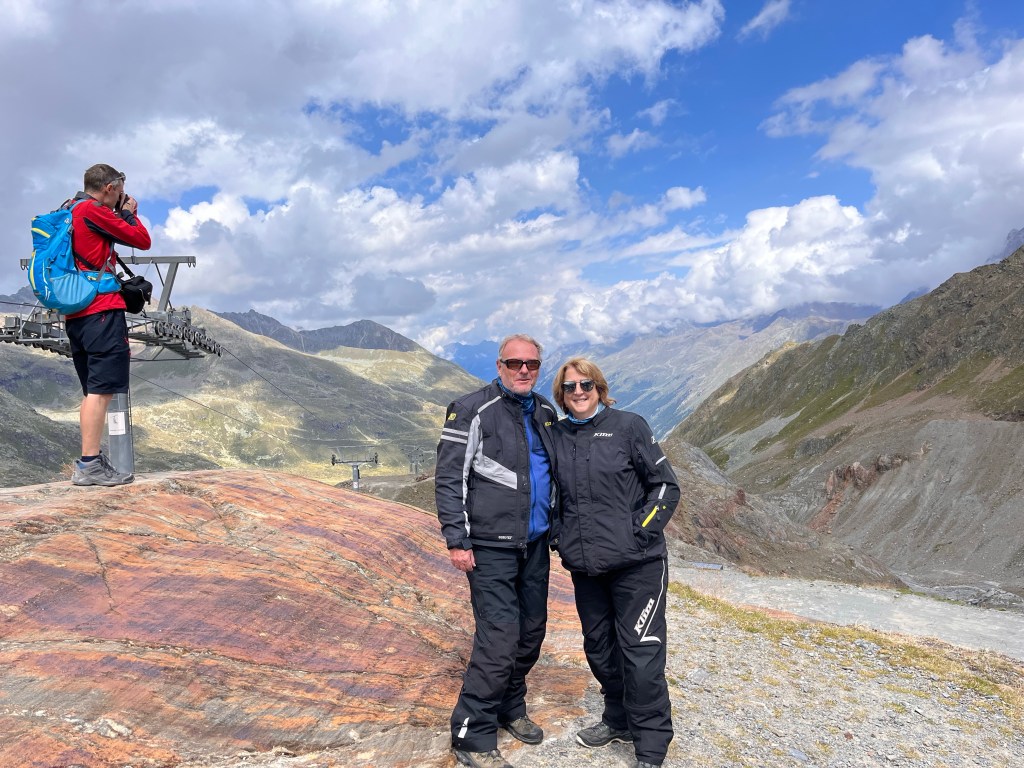
The Kaunertal Glacier Road follows an old pilgrimage route dating back to the Middle Ages. With 29 switchbacks, the road climbs to over 9300 ft. The road is purportedly Austria’s most beautiful cul-de-sac and is affectionately called the “dream road to the eternal ice”. There is skiing 10 months a year in this region. And what a fun road!
We had lunch at an “Alm,” a mountain hut that serves motorized travelers, bicyclists, and hikers. This seemed way more fancy than my preconceived image of a mountain hut.
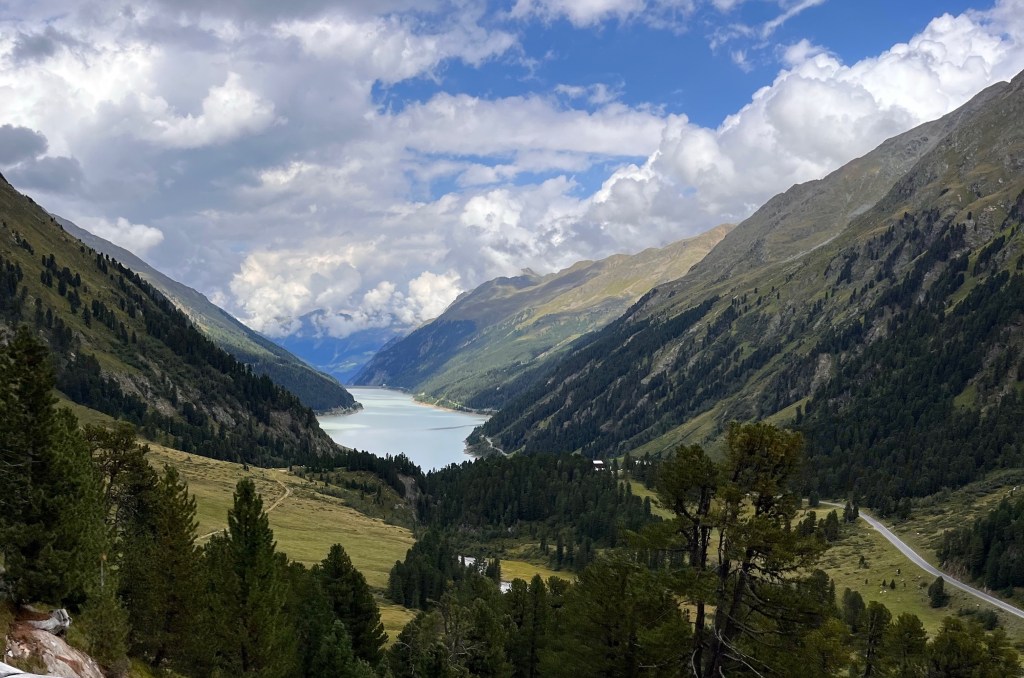
Courtesy Eyal, of one of our fellow ridersSome of the 29 switchbacksThe Kaunertal Glacier. A decade ago the peaks and the darker gray stone was all covered by the glacier. It’s really quite sad. A view of the reservoir from Kaunertal Glacier
We ended the day in a picturesque village in the Upper Inn Valley called Prutz.
Tonight we met all the whole tour group. Strangely enough everyone is from North America. There are five riders and one passenger, Connie. Our tour guide, Michael, hails from Germany. He is the architect behind many of the Edelweiss Extreme tours. We started the evening with an orientation and then had dinner together. Everyone seems quite eager to get started tomorrow.
Hank did a rider’s course earlier in the day with Michael and one other rider in our group. It was really helpful.
Connie took a long walk in the woods and spent some time around a local lake.
We are packed and ready to roll. Hoping to get a good night’s sleep.
Today was a day of transition to the next stage of our trip. We checked out of Pension Seelos and moved our baggage train to Gästhaus Neuwirt which is close to the Edelweiss Bike Tours. Beginning with a meeting tonight, we’ll prepare for our week on the road. All that riding gear we lugged from home is getting put to use.
We headed out for a couple hours of riding south and west of Mieming. We rode by a couple of pretty and rather secluded mountain lakes near Kühtai. (You can Google it if you like.)
The roads were perfect for riding and seemed pretty comfortable to some of the larger farm animals around, too. We met two very pretty brown draft horses clopping their way up the middle of the road. Fortunately, they left us enough room to scoot gently by. No one, animal or human, was overly tense so this must be a fairly common occurrence in this predominantly agricultural area.
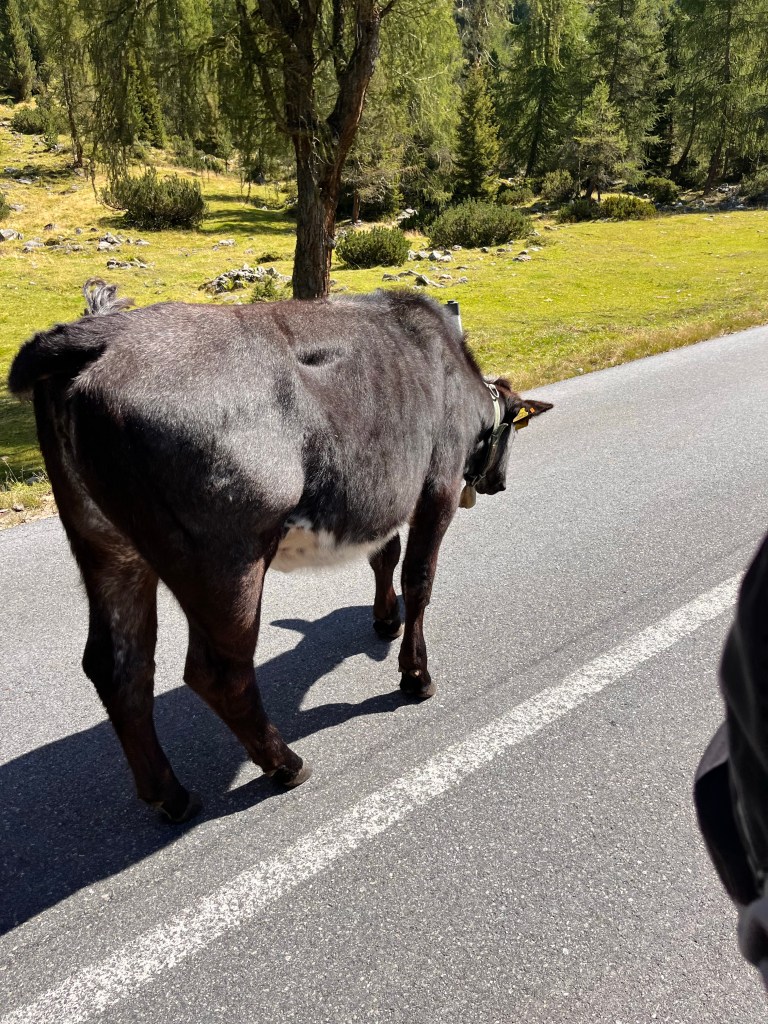
A bit later, we rode by some substantial leavings in the road that were both abundant and distinctly aromatic. Sure enough, we came to the source: a half dozen cows lounging and frolicking (?) about the roadway. Real free range cattle! Unlike our encounter with a herd of cattle in Colorado on our tour in 2017, the cows weren’t alarmed. No one seemed put out. We all just eased on by each other while trying to dodge the bigger road apples.
We stopped for cake and coffee then started back toward Meiming. A little shopping for incidentals was important. Most stores and businesses are closed Sundays and we didn’t want to miss stocking up on snacks.
And here we are.
Studied indifference We haven’t mentioned the old fortifications that are abundant in the area. It’s hard to get a decent shot from the bike.
A last note. We had a question about border controls. Based on the Schengen Agreement, 26 European nations have open border agreements. It’s as easy to travel from France to Germany as it is from NJ to Pennsylvania. While staying in Austria these past few days, we had lunch in Austria, Germany and Italy. I find it’s still difficult to wrap my head around the fact that we move easily between different countries, sometimes without even noticing.
































 Wandering Retirees