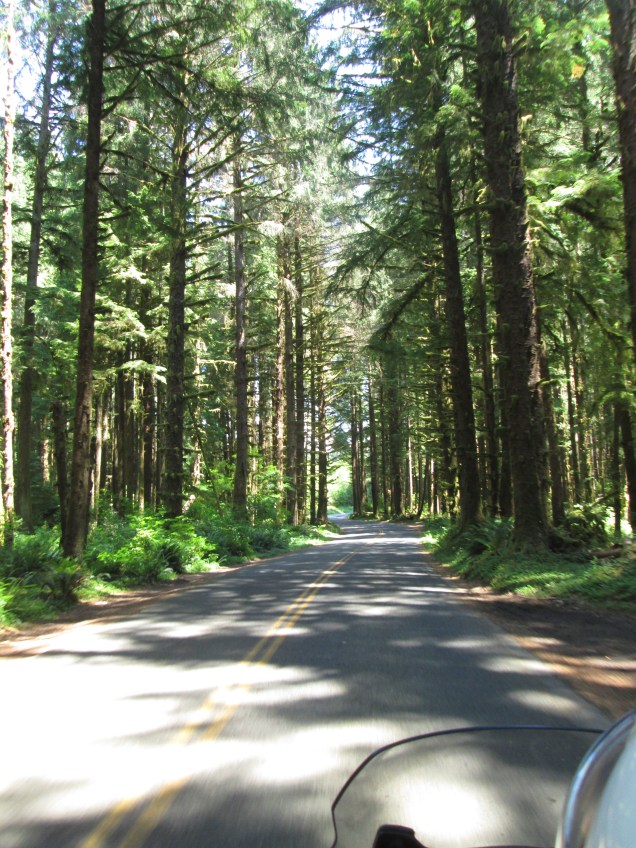
It was a beautiful day in the neighborhood. We made an excursion to the Hoh Valley Rain Forest, one of the seven wonders of Washington State, about 50 miles away. Connie and I led the way on our bike while Judy, her cat and Pat bounced along after us. A fun ride.
Hoh Rain Forest is one of the few temperate (not tropical and swelteringly hot) rain forests in the world. Like it’s name, Hoh Rain Forest historically has gotten about 240 inches of rain per year, though it’s been declining in recent years. There is concern for how the forest will cope with a warming climate.
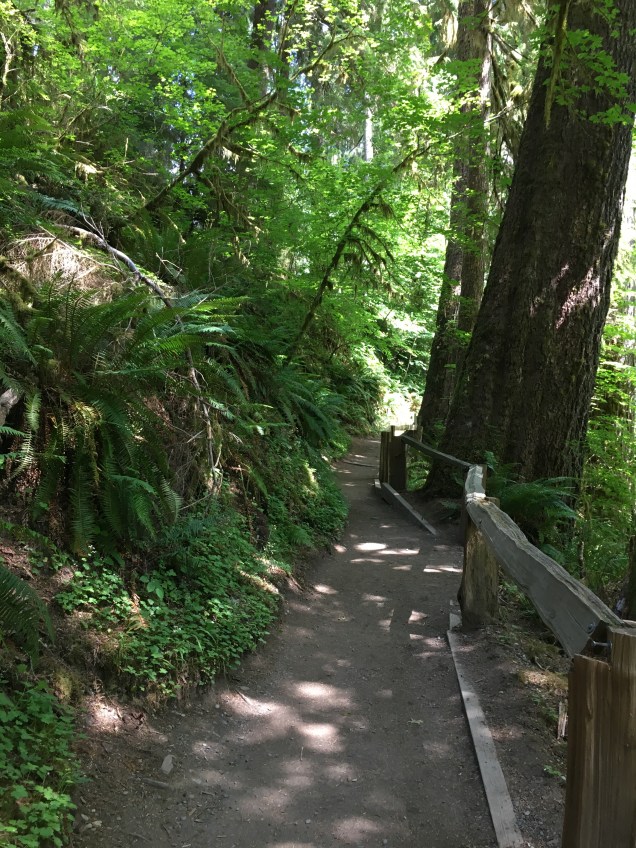
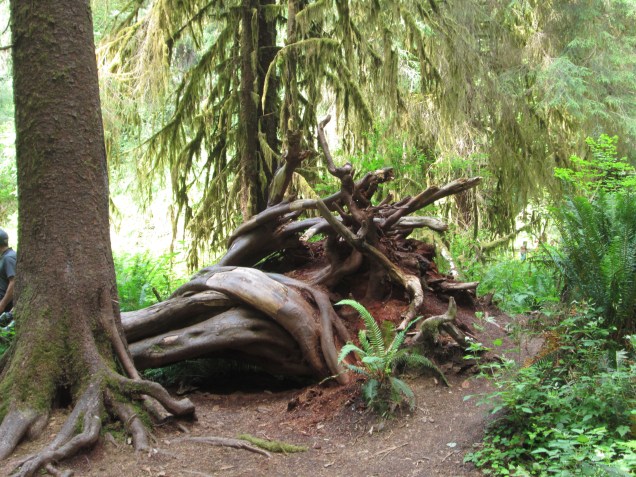
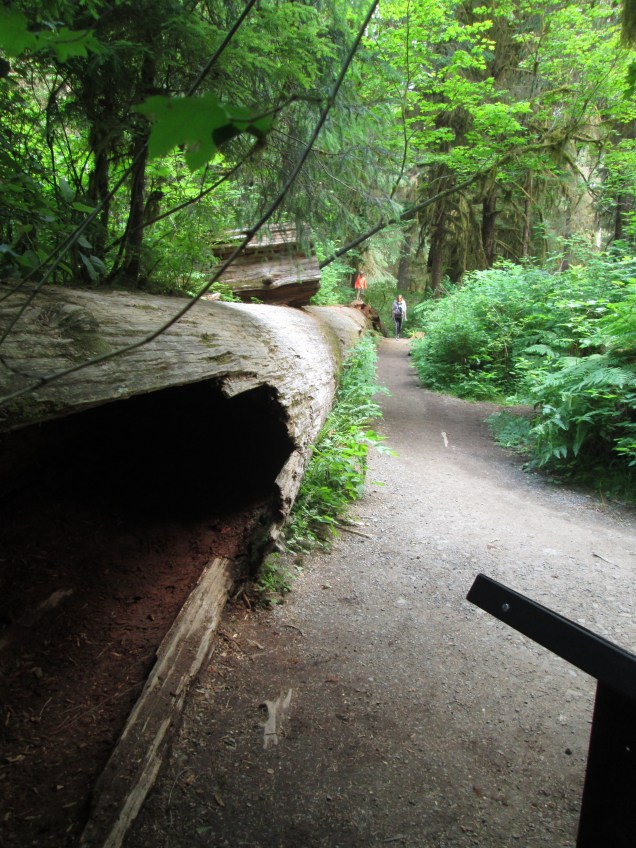
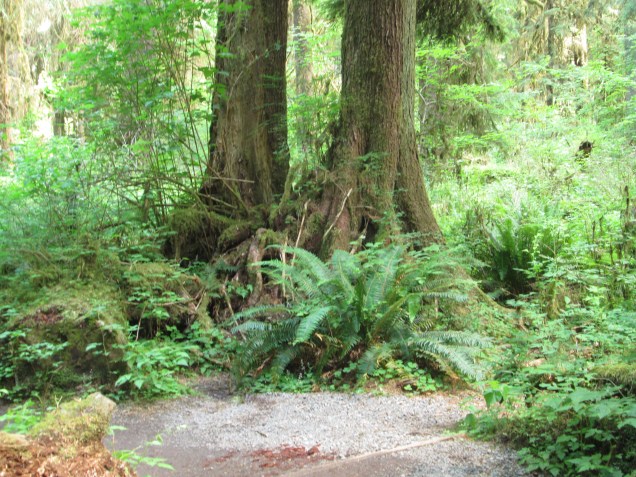
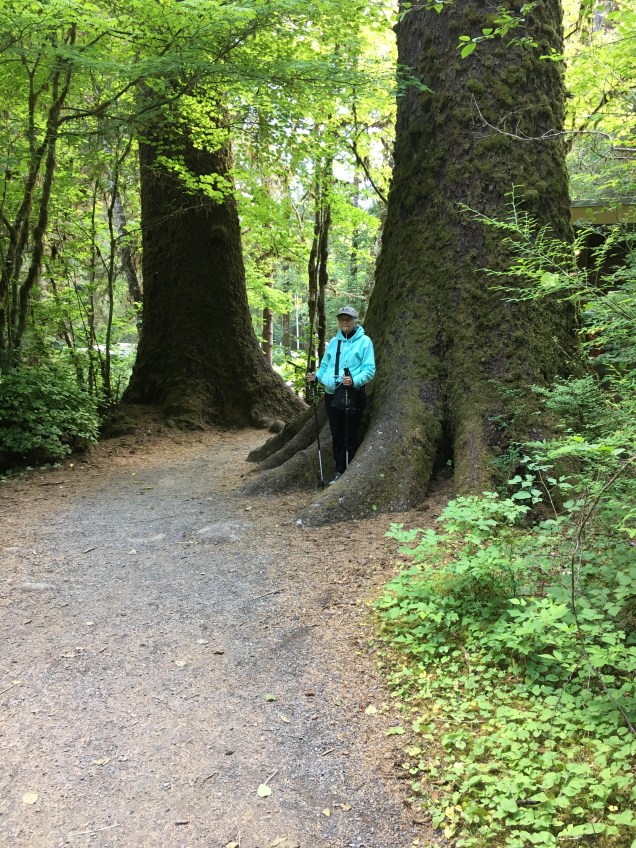
We hiked/strolled along a nice trail called the Hall of Mosses (I first saw “Moses” and though of parting seas of flowers, so forth) that features a panoply of plants, big and small. Judy, who lived in Washington until recently, was a wonderful guide, especially to the native species. And some were spectacular! The largest were the Sitka Spruce and Western Hemlock which can be 1,000 years old in the park, reach 300 feet high and seven feet in diameter. The life cycle of these goliaths is fascinating. When a giant falls, it naturally begins to decay and break down into its constituent nutrients. Eventually, shoots and seedlings take root in the fallen body and begin to grow, competing with other small plants for nutrients and sunlight. The decaying tree is considered a “nurse” tree to all who depend on it. The shoots bide their time, growing slowly in the remains of the nurse tree until another giant falls, creating a gap in the canopy that allows more sunlight to reach the forest floor. With more light it’s off to the races with the swiftest, strongest and luckiest young trees making it to tall adulthood. Eventually, the nurse tree is totally used up, leaving an impressive array of roots visible above ground. And the cycle repeats again and again.
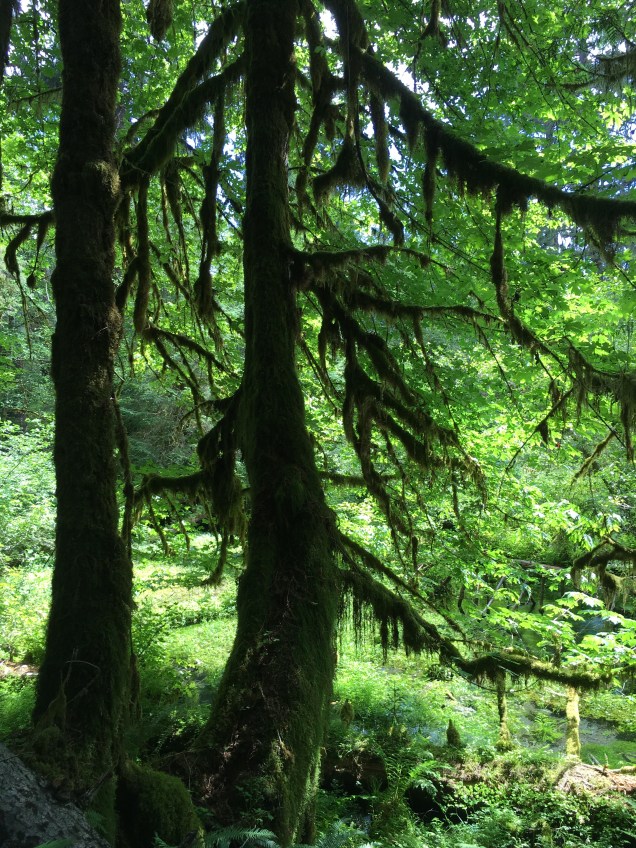
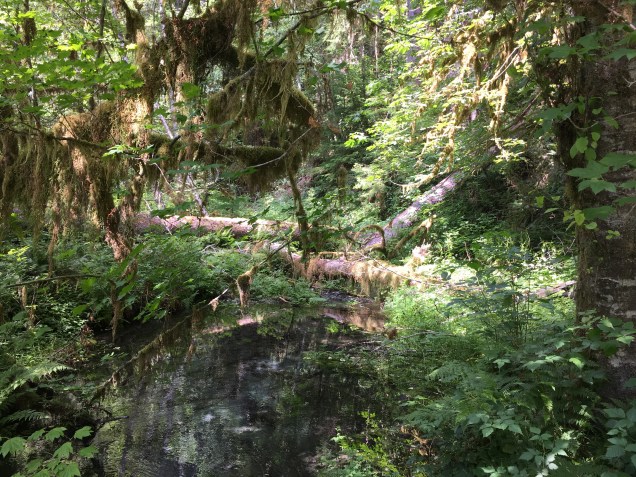
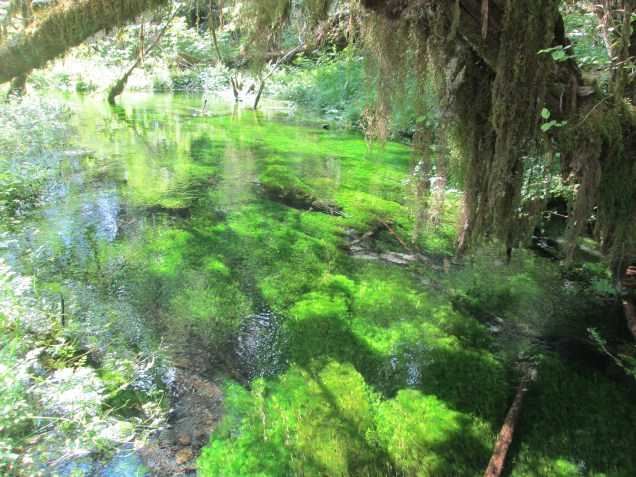
The Hall of Mosses gets its name from the impressive mats of lichen and mosses that adorn nearly every tree. It made me think of Spanish Moss in the south, but it doesn’t drape so thickly up here. The moss attaches itself to the tree, but is not a parasite that relies on the tree for sustenance. Rather, it makes its living on the mist and fog and the particulate matter that is suspended in the moist air. In the right light, it looks stunning and a bit eerie.
When we got home we indulged in some dinner and beverages, and have started packing for our journey to our next destination. You may remember what I said about unpacked belongings scurrying to hide-holes everywhere. Well, we’re hunting and gathering now. Tomorrow it’s on to Nanaimo on Vancouver Island, BC via the ferry from Port Angelis, WA. Should be fun!

I seriously cannot wait for good, fast internet. #spoiled #firstworldproblems
 Wandering Retirees